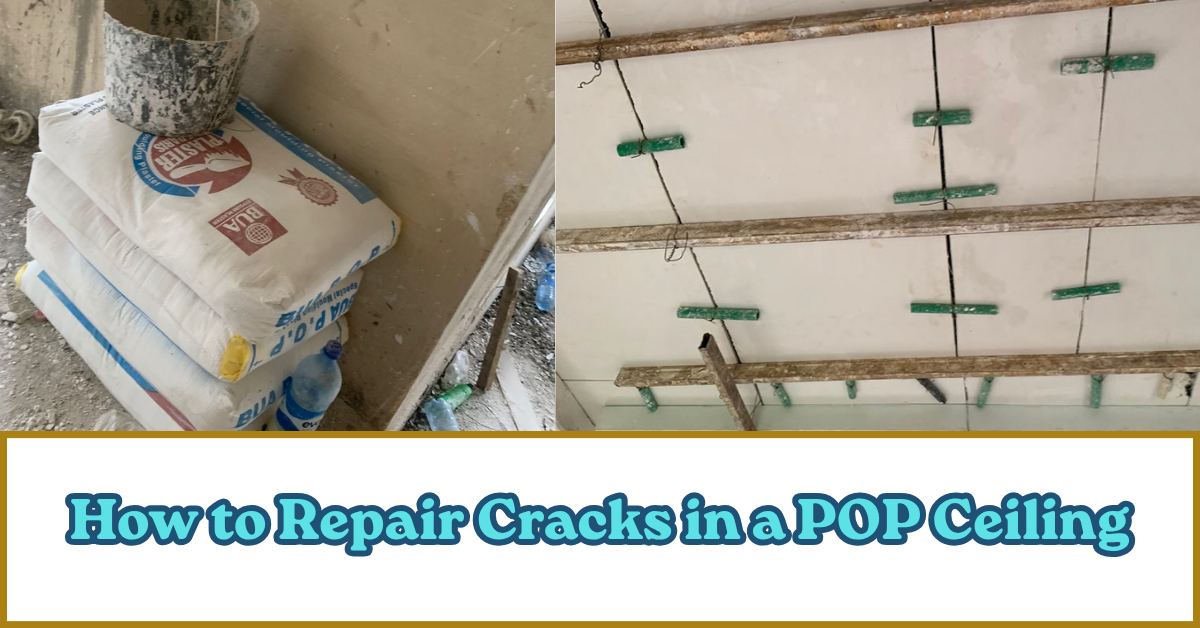
How to Repair Cracks in POP Ceiling
A POP ceiling adds beauty, elegance, and value to any home. It improves the aesthetics and ambiance of the living space, also adds beauty to lighting, and gives rooms a modern appearance. However, even a professionally installed POP ceiling may develop cracks over time. While small cracks may seem harmless at first, ignoring them can allow the damage to spread, making repairs more expensive and affecting the overall appearance of your ceiling.
The good news is that most POP ceiling cracks can be repaired successfully without replacing the entire ceiling. The key is identifying the cause of the crack, using the right repair materials, and following the correct repair process. If the crack is a fine hairline crack or a wider structural crack, proper repair techniques can restore the ceiling and help prevent future problems. Also see: What are the Advantages and Disadvantages of POP Ceiling
This article explains everything you need to know about repairing cracks in POP ceiling, including the common causes, different types of cracks, the tools and materials required, repair methods to use, maintenance tips to help your ceiling remain beautiful for many years. See: 10 Things to Know Before Installing a POP Ceiling
What Causes Cracks in a POP Ceiling?
Understanding why a POP ceiling cracks is the first step toward finding a permanent solution.
Several factors can contribute to ceiling cracks.
Poor Workmanship
One of the most common causes is poor installation. Incorrect gashing or positioning, improper joint treatment or poor racur finishing techniques can create stress points that eventually develop into cracks.
Structural Movement
Buildings naturally expand and contract because of temperature changes, foundation settlement, and structural movement. These movements can place pressure on the POP ceiling and cause visible cracks.
Water Damage
Roof leaks, plumbing leaks, or excessive moisture can weaken the POP material. Over time, this may result in staining, peeling paint, and cracking.
Low Quality Materials
Using poor quality Plaster of Paris (POP cement), bad sponge, or bad fixing can reduce the strength and durability of the ceiling.
Improper Drying
Painting or finishing the ceiling before the POP has dried completely may trap moisture and contribute to future cracking.
Excessive Weight
Installing heavy chandeliers or ceiling fixtures without proper structural support can place additional stress on the ceiling. or nail your ceiling fan after you have finish installing POP ceiling. Also see:15 Common Reasons POP Ceilings Fall and How to Prevent It
Types of POP Ceiling Cracks
Not every crack has the same cause or requires the same repair method.
Hairline Cracks
Hairline cracks are very thin surface cracks that usually develop because of minor shrinkage or normal building movement.
They are generally easy to repair.
Joint Cracks
These cracks appear where two sections of the ceiling meet.
They often result from poor mixing of racur gash or using dry gash for your dressing.
Structural Cracks
Structural cracks are wider and deeper than ordinary surface cracks.
They may indicate movement within the building or problems with the ceiling construction.
Professional inspection is recommended before attempting repairs.
Water Damage Cracks
These cracks usually appear together with stains, bubbling paint, or soft areas caused by moisture.
The source of the water leak must always be repaired before fixing the ceiling.
Can Cracked POP Ceilings Be Repaired?
Yes.
Most POP ceiling cracks can be repaired successfully without replacing the entire ceiling.
Minor surface cracks usually require simple filling, sanding, and repainting.
Larger cracks may require reinforcing the damaged section with proper gashing, and fresh POP Mixing.
Only severely damaged ceilings with structural failure or extensive water damage may require partial replacement.
Tools and Materials Needed
Preparing the right tools before starting the repair makes the work easier and produces better results.
You may need: Putty knife or screeding pan, Scraper, Sandpaper, POP cement, Fibre mesh tape, Clean water, Mixing bucket, Ladder or scaffold, Safety goggles and Dust mask.
Safety Precautions Before Starting
Safety should always come first during ceiling repairs.
Switch off electrical power if repairing areas close to lighting fixtures or electrical wiring.
Wear safety goggles to protect your eyes from dust.
Use a stable ladder or set a scaffold.
Wear a dust mask while sanding.
Avoid standing directly under loose ceiling sections.
Inspect the damaged area carefully before beginning repairs.
Steps to repair Cracks in a POP Ceiling
Step 1: Inspect the Crack
Examine the crack carefully.
Determine if is a small surface crack or a deeper structural crack.
Look for signs of water damage, sagging, or loose materials.
Step 2: Remove Loose Material
Use a scraper or saw to remove loose POP, peeling paint, and weak material surrounding the crack.
Cleaning the damaged area helps the repair material bond properly.
Step 3: Clean the Surface
Brush away dust and debris.
A clean repair area improves adhesion and creates a stronger repair.
Step 4: Apply Mesh Tape
For wider cracks, apply fibre mesh tape over the damaged area.
The tape reinforces the repair and helps reduce future cracking.
Step 5: Apply New mixing Compound
Use a scrapper to apply new and fresh mixing POP cement to dress evenly over the crack.
Press the dressing gash firmly into the damaged area.
Smooth the surface as much as possible.
Allow the racur or dressing to dry completely.
Step 6: Sand the Surface
After drying, sand the repaired area gently until it blends smoothly with the surrounding ceiling.
Remove all sanding dust before painting.
Step 7: Repaint the Ceiling
Apply matching ceiling paint over the repaired area.
For the best appearance, repaint the entire ceiling if colour differences are noticeable. See also: How to Paint a POP Ceiling: Best Paint to Use
How to Repair Hairline Cracks
Hairline cracks usually require less work.
Clean the crack thoroughly.
Apply small fresh gash POP mixing using a putty scrapper.
Allow it to dry completely.
Lightly sand the repaired area.
Repaint.
Because hairline cracks are shallow, extensive repairs are generally unnecessary.
How to Repair Large or Deep Cracks
Large cracks require additional reinforcement.
Remove all loose POP until you reach solid material.
Apply new gashing or positioning.
Fill the area with long and pla.
Allow sufficient drying time before you start dressing the crack area.
Sand the repaired surface until smooth.
Repaint the ceiling.
If cracks continue to reappear, consult an experienced POP ceiling installer because structural movement may be involved.
When to Replace Part of the Ceiling Instead of Repairing It
Repairs may not always be the best solution.
Partial replacement is recommended when: Large sections have become loose., Extensive water damage has weakened the ceiling, Structural failure is present, and when the damaged area continues cracking after repeated repairs.
Common Mistakes to Avoid
Many homeowners unintentionally reduce the quality of their repairs.
Avoid painting directly over cracks without repairing them.
Never ignore roof leaks before repairing the ceiling.
Using poor quality repair materials often results in repeated cracking.
Rushing the drying process may weaken the repair.
Taking time to complete each stage properly produces longer lasting results.
How to Prevent POP Ceiling Cracks in the Future
Preventive maintenance is always better than repeated repairs.
Use experienced POP ceiling installers.
Choose high quality Plaster of Paris (POP cement) and sponge.
Repair roof leaks immediately.
Ensure adequate structural support for heavy lighting fixtures.
Allow POP to dry completely before painting.
Inspect the ceiling periodically for small cracks.
Repair minor defects before they become larger.
Routine maintenance greatly extends the lifespan of a POP ceiling. Also see: POP Ceiling Materials List in Nigeria
Cost of Repairing POP Ceiling Cracks in Nigeria
The cost of repairing POP ceiling cracks varies depending on several factors.
These include the size of the damaged area, the severity of the crack, labour charges, material quality, and your location.
Simple hairline crack repairs generally cost much less than repairing extensive structural damage or replacing large ceiling sections.
Request quotations from experienced POP ceiling contractors before beginning major repairs. contact us for your quote
Investing in quality workmanship often reduces future maintenance expenses.
FAQs
1. Can I repair POP ceiling cracks myself?
Yes. Minor hairline cracks can often be repaired by homeowners using basic repair materials and proper techniques.
2. Why do POP ceiling cracks keep coming back?
Recurring cracks usually indicate unresolved structural movement, poor workmanship, water damage, or low quality materials.
3. What is the best filler for POP ceiling cracks?
POP cement produces durable repairs for most ceiling cracks.
4. Can I paint over a cracked POP ceiling?
Painting over cracks without repairing them will not solve the problem. Proper repairs should always be completed first.
5. How long should the repair dry before painting?
Always allow the repair area to dry completely according to the manufacturer’s recommendations before applying paint.
6. Should I repair or replace a cracked POP ceiling?
Minor cracks usually require repairs only. Severe structural damage or extensive water damage may require partial replacement.
Conclusion
Cracks in a POP ceiling can be frustrating, but they do not always mean the entire ceiling must be replaced. Most cracks can be repaired successfully when the underlying cause is identified and the correct repair methods are used. If the damage is caused by normal building movement, poor workmanship, water leaks, or low quality materials, timely repairs help restore the ceiling’s appearance and prevent more serious problems.
Using quality repair materials, following proper installation techniques, and carrying out regular maintenance are the best ways to keep a POP ceiling in excellent condition. If you are unsure about the cause of large or recurring cracks, seek professional advice before attempting major repairs. A well maintained POP ceiling will continue to give beauty and value to your home for many years.

Godwin Zion is the founder of Paint Production Academy and a professional paint production trainer with over 18 years of practical experience in paint production, POP ceiling installation, construction finishing, and interior project execution. He teaches practical emulsion, acrylic Matte, and satin paint production using simplified step-by-step methods designed for homeowners, painters, engineers, property developers, artisans, and entrepreneurs. Through Paint Production Academy, he has helped students across Nigeria, Ghana, Cameroon and other part of the world learn valuable paint production skills that can reduce construction costs and create profitable opportunities.