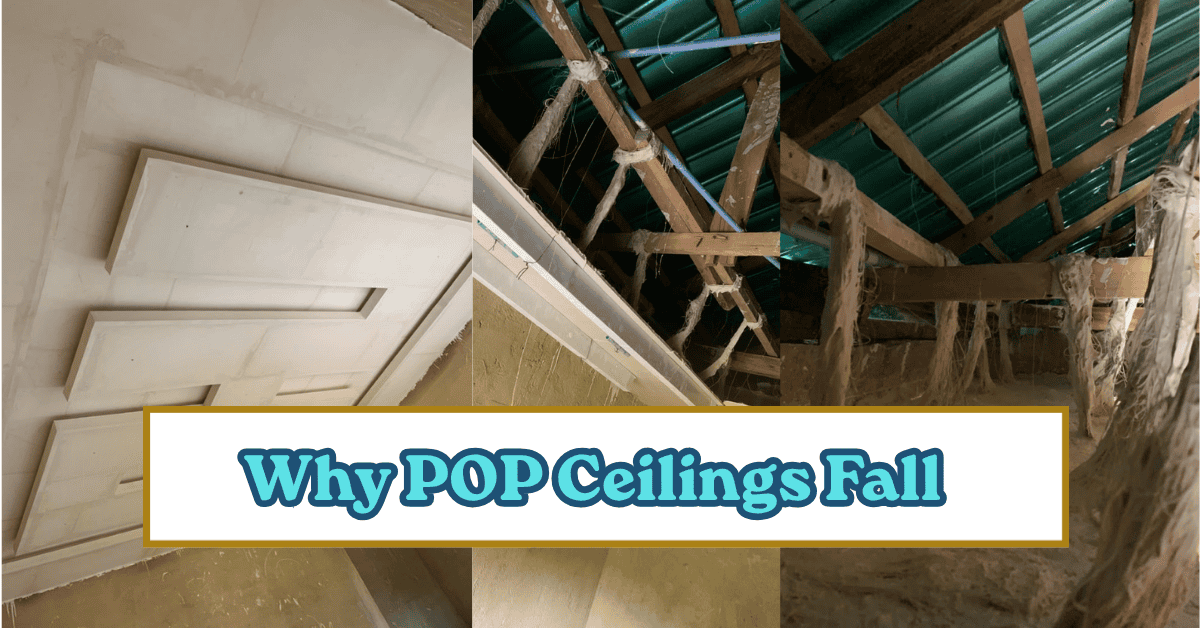
POP ceiling designs have become one of the most popular ceiling design in residential and commercial buildings. They add beauty, aesthetic finishing, give ambience to space, improve interior appearance, conceal electrical installations, and create a modern look that many property owners desire.
However, one of the biggest concerns homeowners face is the sudden failure of a POP ceiling. Cases of cracked ceilings, sagging sections, and complete ceiling collapse have become increasingly common, often resulting in costly repairs and potential safety risks.
The good news is that most POP ceiling failures can be prevented when the root causes are properly understood. In this article, we will discuss the most common reasons POP ceilings fall and the practical steps you can take to avoid these problems.
What Is a POP Ceiling?
POP stands for Plaster of Paris, a construction material widely used for decorative ceilings, cornices, wall designs, and interior finishing.
A properly installed POP ceiling can last for many years without problems. However, poor workmanship, poor gashing, inferior materials, materials management, roof leakage and structural defects can significantly reduce its lifespan.
1. Poor Quality Materials
One of the leading causes of POP ceiling failure is the use of low quality materials.
Many contractors or workers attempt to reduce costs by purchasing inferior pop cement products, and trying to manage materials, These materials may not provide the necessary strength required to support the ceiling over time.
Always ensure quality materials are used during installation and dont try to manage materials.
2. Bad gashing or positioning of pique or long
The gashing system carries the entire weight of the POP ceiling.
When gashing or positioning your long, do not use dry gash or gash that is about to dry to position your long, because after sometime the long will separate itself from the ceiling.
improper spacing of long or pique will make ceiling gradually begins to sag and may eventually collapse.
A professional Pop Ceiling installer should calculate the correct suspension spacing based on the ceiling design and room dimensions. the proper gashing or spacing for long should not be above 40cm each when gashing.
3. Water Leakage From the Roof
Water is one of the biggest enemies of POP ceilings.
Roof leaks, plumbing leaks, and water seepage weaken the ceiling structure and cause the plaster to lose its strength.
Common warning signs include: Water stains, Discoloration, Sagging areas, Soft ceiling surfaces and heavy cracks.
Water problems should be fixed immediately before they cause serious damage.
4. Poor Workmanship
Even when quality materials are used, poor installation practices can still lead to failure.
Examples include: using dry gash to position your long or pla, Incorrect fixing methods like using only one range to fixing your ceiling, Poor mixing techniques, Uneven support distribution like making your long to be too wide from each other, Improper joint treatment like skipping some joint when gashing.
This is why hiring experienced POP Ceiling Design installers is extremely important.
5. Overloading the Ceiling
Many homeowners install heavy chandeliers, ceiling fans, projectors, speakers, and decorative fixtures without providing additional structural support.
The POP ceiling itself is not designed to carry excessive weight.
Heavy installations should always be anchored directly to the noggin rather than relying solely on the ceiling framework.
6. Structural Movement
Buildings naturally experience movement over time due to: Foundation settlement, Soil movement, Temperature changes, and Structural stress
These movements can create cracks and weaken ceiling connections.
7. Poor Ventilation and Excess Moisture
High humidity levels can affect ceiling durability.
Bathrooms, kitchens, and poorly ventilated rooms are especially vulnerable to moisture related damage.
Adequate ventilation helps maintain the integrity of POP ceilings.
8. Inadequate Ceiling Framework
The framework forms the backbone of the ceiling system.
Weak framework design often results in: Sagging sections, Cracks, and Structural instability
A strong and properly designed framework is essential for long term durability.
9. Improper Mixing of POP Materials
The quality of the POP mixture significantly affects performance.
Incorrect water ratios can weaken the final product and reduce bonding strength.
Proper mixing procedures should always be followed according to manufacturer specifications.
10. Electrical Installation Problems
Electrical work often runs through POP ceilings.
Poor electrical installation can create:
- Heat buildup
- Fire hazards
- Structural damage
Electrical systems should be installed by qualified professionals.
11. Failure to Repair Early Cracks
Small cracks are often ignored until they become major structural problems.
Regular inspections help identify issues before they worsen.
Prompt repairs can significantly extend ceiling lifespan.
12. Pest and Rodent Damage
Rodents and pests sometimes create hidden damage within ceiling spaces.
Over time, this can weaken supporting materials and contribute to structural failure.
Proper pest control on your noggin measures should be implemented.
13. Excessive Ceiling Span
Large ceiling areas require additional support.
When support spacing exceeds recommended limits (40 cm), the ceiling may begin to sag under its own weight.
Professional design calculations help prevent this problem.
14. Poor Maintenance
POP ceilings require periodic inspection and maintenance.
Neglecting minor defects can eventually lead to costly repairs or complete failure.
Routine maintenance helps preserve both appearance and structural integrity.
15. Hiring Inexperienced Installers
Perhaps the most avoidable cause of POP ceiling failure is hiring unqualified installers.
Many ceiling failures occur because individuals without proper training attempt installations beyond their skill level.
Always work with experienced professionals who understand proper installation procedures.
Warning Signs That Your POP Ceiling May Be Failing
Watch for these signs: Visible cracks, Sagging sections, Water stains, Bulging surfaces, Unusual sounds from the ceiling, Separation at joints.
If any of these signs appear, immediate inspection is recommended.
How to Prevent POP Ceiling Failure
To maximize ceiling lifespan: Use quality materials, Hire experienced Pop ceiling installer, Fix roof leaks immediately, Aviod using dry gash to hold or position your long, Avoid overloading the ceiling, Aviod using dry gash for your dressing or racur, Ensure proper ventilation, lastly when gashing the position of your long or pique should not be above 40 cm each.
These simple steps can save significant repair costs in the future.
Final Thoughts
POP ceilings remain one of the most attractive interior finishing options available today. When properly designed, installed, and maintained, they can provide decades of service without problems.
Most ceiling failures occur because of preventable mistakes such as poor workmanship, inferior materials, water damage, and poor gashing or positioning of long.
Understanding these causes will help homeowners, builders, property developers, and contractors avoid costly repairs and ensure long lasting ceiling performance.
Frequently Asked Questions
How long should a POP ceiling last?
A properly installed POP ceiling can last 15 to 30 years or more when maintained correctly.
Can water damage cause a POP ceiling to fall?
Yes. Water leakage is one of the most common causes of POP ceiling failure.
Is a cracked POP ceiling dangerous?
No. small cracks are not dangerous, but they should be inspected to prevent further structural damage.
Can heavy chandeliers cause POP ceilings to collapse?
Yes. this is why it is recommended you always make seperate provision for your chandeliers, because Heavy fixtures can overload the ceiling if additional structural support is not provided.
How can I tell if my POP ceiling is becoming weak?
You should always check out for places that sag down, Warning signs also include cracks, water stains, bulging areas, and unusual ceiling movement.

Godwin Zion is the founder of Paint Production Academy and a professional paint production trainer with over 18 years of practical experience in paint production, POP ceiling installation, construction finishing, and interior project execution. He teaches practical emulsion, acrylic Matte, and satin paint production using simplified step-by-step methods designed for homeowners, painters, engineers, property developers, artisans, and entrepreneurs. Through Paint Production Academy, he has helped students across Nigeria, Ghana, Cameroon and other part of the world learn valuable paint production skills that can reduce construction costs and create profitable opportunities.