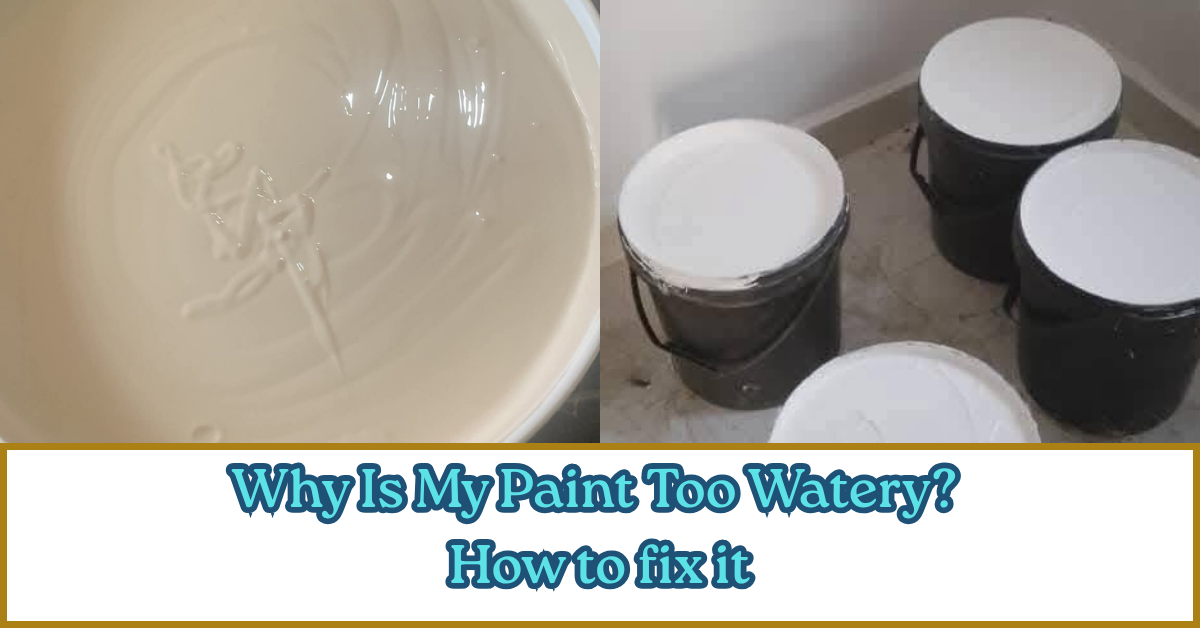
If your paint looks more like coloured water than paint, it may have a formulation problem. Watery paint can run down walls during application, provide poor coverage, and require more coats than expected. For paint producers, an unusually watery batch can also indicate incorrect water measurement, incomplete thickener preparation or a problem with the formulation.
However, not every watery paint is defective. Some paint products are naturally more fluid than others. Before adding more chemicals or thickener, identify why the paint is too watery. The correct solution depends on the type of paint, its formulation, the materials used and if the problem occurred during production or after the paint was opened. Also See Why Is My Paint Not Covering Well? 9 Causes and How to Fix It
Why Is My Paint Too Watery?
The most common causes of watery paint include excess water, incorrect thickener dosage, poor mixing, and formulation errors.
1. Too Much Water Was Added During Production
Excess water is one of the first things to investigate when a newly produced batch of paint is too watery.
Water is an important component of water-based paint, but adding more than the formulation requires dilutes the paint’s non-volatile ingredients. These include the binder, pigments and fillers responsible for film formation, colour and coverage.
For example, if a paint producer uses more water than the specified quantity when manufacturing a drum of paint, the finished product may have lower thickness and reduced coverage.
Adding more water to an already watery batch will make the problem worse.
How to fix it: If it is emulsion paint, add a little calcium, and extra Binder, if it is matte paint you can add your liquid thickener or you dissolve your Nitrosol and add to your formulation, if it is satin paint you have to dissolve your thickener and apply to your paint or you can use liquid thickner.
2. The Thickener Was Not Prepared Properly
Thickeners help control the thickness and application properties of many water-based paints. In some locally produced formulations, Nitrosol is used as a thickening agent. See What Is Thickener Nitrosol Used for in Paint Production?
However, the presence of a thickener in the formulation does not guarantee that the paint will reach the required thickness. The result depends on the grade of the material, the amount used, the preparation method, the mixing process and compatibility with the other ingredients.
If a thickener that requires dissolving has not been properly prepared, it may not develop its expected thickening effect it might even cause lumps in paint.
How to fix it: Confirm that the thickener was properly dissolved or hydrated before applying it to the paint. Do not assume that every thickener works in the same way. Different thickener grades have different preparation requirements.
3. The Paint Has Separated During Storage
Have you opened a bucket of paint and noticed a watery liquid sitting on top? The paint may have separated while it was stored.
Water-based paint contains several ingredients that must remain sufficiently stable throughout storage. Depending on the formulation and storage conditions, liquid may separate from the more concentrated material beneath it.
Some separation can be reversible with proper stirring. However, a thick layer of clear liquid, hard sediment, unusual lumps or a persistent change in consistency may indicate a more serious stability problem.
How to fix it: Stir the paint thoroughly from the bottom of the container and check whether the ingredients return to a uniform state. If the paint remains lumpy, smells unusual, has visible contamination or cannot be restored to a uniform mixture, do not assume that additional stirring will make it usable. Also see: Chemicals for Satin Paint: Complete List and Their Functions
4. The Wrong Quantity of Thickener Was Used
A paint formulation needs the correct balance of water, binder, pigments, fillers and other preservatives. Using less thickener than required can produce a batch that is watery than intended.
However, adding more thickener is not always the correct solution. A thickener may behave differently depending on the binder system, pH, other additives and the stage at which it is introduced.
How to fix it: Check the formulation sheet, weigh the thickener accurately you use in your formulation, If the quantity was correct, investigate preparation, compatibility and the mixing sequence before changing or trying other solution.
5. The Paint Was Not Mixed Properly
Poor mixing can leave some ingredients unevenly distributed throughout the batch. The paint may appear watery in one section while another part is thicker.
This problem is particularly important when a producer uses a mixing procedure that does not adequately dissolve the ingredients or incorporate the thickener.
How to fix it: Mix the batch according to the established production procedure, ensuring that the material at the bottom and sides of the container is incorporated well. Observe the paint after mixing to see if it meet your expected standard. See Paint Production Process for Beginners
6. The Paint Was Stored Under Unsuitable Conditions
Storage conditions can affect the consistency and stability of water-based paint. Excessive heat, freezing, contamination, damaged packaging and prolonged storage may cause changes in the product.
If paint has been exposed to freezing conditions, for example, its emulsion may be irreversibly damaged. Stirring or adding thickener will not necessarily restore the original performance.
How to fix it: Check the storage history, packaging condition and manufacturer’s storage instructions. If the paint has undergone a significant change in appearance, smell or consistency, test its quality before use.
FAQs
1. Why is my satin paint watery after mixing?
Possible causes include excess water, poor mixing, incorrect thickener preparation or a formulation imbalance. Check the water quantity and mixing procedure before adding any more chemicals.
2. How do I thicken watery paint?
If it is emulsion paint, add a little calcium, and extra Binder, if it is matte paint you can add your liquid thickener or you dissolve your Nitrosol and add to your formulation, if it is satin paint you have to dissolve your thickener and apply to your paint or you can use liquid thickner.
3. Why is my paint watery at the top of the bucket?
The paint may have separated during storage. Stir it thoroughly and check whether it returns to a uniform mixture. Persistent separation, lumps or unusual odour may indicate a contamination problem.
4. Can too much water ruin emulsion paint?
Yes. Excessive water can reduce hiding power and the amount of binder and pigment deposited in each coat. It can also increase running and sagging during application.
5. Why is my paint still watery after adding Nitrosol?
If it is emulsion paint, add a little calcium, and extra Binder, if it is matte paint you can add your liquid thickener or you dissolve your Nitrosol and add to your formulation, if it is satin paint you have to dissolve your thickener and apply to your paint or you can use liquid thickner.
6. Is watery paint always bad?
No. Some paints are naturally more fluid than others, and temporary separation may be reversible. The important question is whether the paint meets the viscosity and performance requirements for its intended use.
Conclusion
Watery paint can result from excess water, incorrect thickener dosage, poor mixing, separation during storage or an unbalanced formulation. The right correction depends on identifying the actual cause.
If you are producing paint, measure ingredients accurately, follow the correct preparation procedure and evaluate the finished batch before packaging. If you are painting a house, check the product instructions and avoid adding water simply because the paint seems difficult to apply. See more

I am Godwin Zion With over 18 years of hands-on experience in construction finishing, I help organizations, entrepreneurs, vocational institutions, and development programs build practical skills that create jobs, improve quality, and support sustainable businesses.
My expertise combines technical knowledge with practical field experience in paint production, POP ceiling installation, wall preparation, decorative finishing, and construction finishing. I have trained aspiring entrepreneurs, skilled artisans, and business owners to produce high-quality paints, deliver professional finishing services, and build profitable businesses.
I believe practical skills create economic opportunities. My mission is to equip individuals and organizations with the knowledge, systems, and confidence to succeed in the construction finishing industry across Africa.