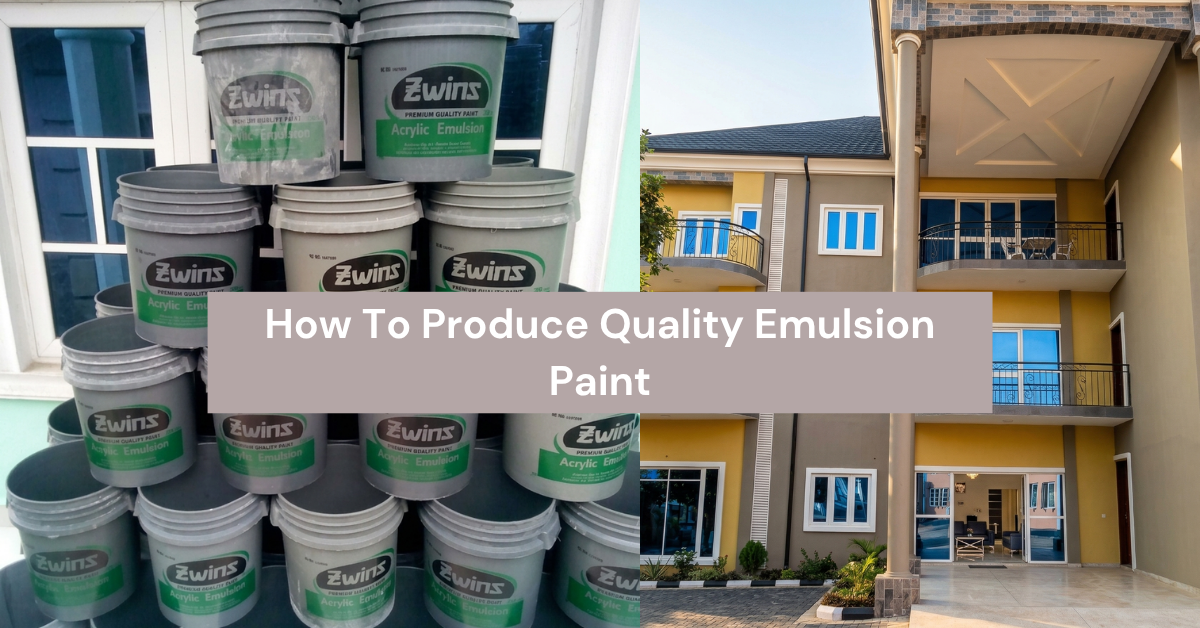
How To Produce Emulsion Paint
Welcome to this practical session on how to produce quality emulsion paint professionally. If your goal is to produce quality paint that customers will love, willingly pay for, and even recommend to others, then this guide will help you understand the important materials and methods used in professional emulsion paint production.
Many beginners struggle with paint production because they do not properly understand the purpose of each chemical used during production. Some paints fail to spread properly, some wash off easily, while others spoil after a short time. Producing quality emulsion paint requires proper understanding, proper measurement, and proper mixing techniques.
In this detailed tutorial, you will learn the step by step process of producing quality emulsion paint using practical methods that are easy to understand and apply.
Why Quality Emulsion Paint Matters
Quality emulsion paint is important because customers always look for paint that:
- Spreads properly
- Covers wider wall surfaces
- Lasts long without spoiling
- Does not wash off easily
- Gives smooth finishing
- Looks professional after application
When your paint performs well, customers will recommend your product and continue buying from you.
Materials Needed For Emulsion Paint Production
To produce quality emulsion paint, the following materials is needed:
Titan. Genospur, Calcium, Formaline, Thickener, Acrylic Gum, Ammonia, Clean Water.
Each material performs an important role when producing your Emulsion Paint. Also see: How To Produce Quality Acrylic Matt Paint Step By Step
Step By Step Process Of Producing Quality Emulsion Paint
Step 1: Apply Titan In Water
The first material used in producing quality emulsion paint is titan.
Apply your Titan inside water and stirred thoroughly.
One very important thing during paint production is proper stirring. Every chemical must mix properly to achieve smooth and professional paint consistency.
Purpose Of Titan In Paint Production
Titan serves as a spreading agent.
This is what gives paint proper coverage.
Many low quality paints fail because they do not spread properly on walls. You may notice some paints still showing wall patches even after painting.
The purpose of titan is to help the paint spread across wider wall surfaces effectively.
Without enough titan, the paint may not cover properly.
This is why titan is one of the most important chemicals in emulsion paint production.
Step 2: Apply Calcium
After applying your titan, the next material to apply is calcium.
Purpose Of Calcium In Paint Production
Calcium is regarded as the body of the paint itself.
It contributes heavily to the paint structure and volume.
After applying calcium, make sure you stir the mixture properly to maintain smooth consistency.
Proper stirring is necessary to avoid lumps and uneven texture.
Step 3: Apply Genopol
After properly mixing the the Calcium, the next chemical to apply is genopol.
Purpose Of Genopol In Paint Production
Genopol serves as a preservative agent.
It helps makes the paint to roll smoothly on the roller
It also helps improve the durability of the paint and prevents quick spoilage.
Preservative agents are very important in paint production because they help the paint remain usable for longer periods.
Step 4: Apply Formaline
The next chemical to apply after genopol is formaline.
Purpose Of Formaline In Paint Production
Formaline also serves as a preservative agent.
The reason formaline is added during paint production is to improve paint durability and help prevent spoilage.
Quality paint can remain stable for several years without spoiling when proper preservative agents are used.
Without adequate preservatives, paint can spoil quickly or lose quality during storage.
Step 5: Apply Thickener
One of the most important materials in paint production is thickener.
without thickener or Nitrosol you can make any paint
Thickener is also known as nitrosol.
Purpose Of Thickener In Paint Production
Thickener helps the paint bind together and become properly thick.
Without thickener, the paint will remain watery and unstable.
Thickener is responsible for helping all the materials combine properly into finished paint.
Before reading further, Kindly answer 👇this question
Do you Want to Produce These Paints Yourself?
If you have ever wanted to manufacture quality emulsion, acrylic matte, and satin paints instead of buying them, this is exactly what we teach inside Paint Production Academy.
The training covers:
Professional paint formulas
Material selection
Mixing procedures
Quality control
Cost calculation
Production for small and commercial quantities
How to start a profitable paint business
Many of our students now produce paint for personal projects and commercial sales.
Learn more about the complete Paint Production Training here.
Kindly enroll here👇
Lets continue…
How To Properly Mix Thickener or Nitrosol
This is one area where many beginners make mistakes.
You should never apply thickener directly the same way you apply other chemicals.
Correct Thickener Mixing Method
Use a separate clean container, Add clean water first to dissolve your thickener, Add the thickener using your measurement and dissolve it immediately before you turn it into your paint, Stir continuously and properly until the paint begins thickening
please note: Always make sure the bucket or container used for mixing thickener is clean.
Proper thickener preparation helps achieve smooth and quality paint consistency.
Step 6: Apply Acrylic Gum
After properly mixing the thickener, the next chemical to apply is acrylic gum.
Purpose Of Acrylic Gum In Paint Production
Acrylic gum helps strengthen the paint and improve paint solidity.
Have you noticed some paints stain clothes or peel off easily when touched?
That usually happens because the paint lacks enough acrylic content.
The purpose of acrylic is to make the paint more solid and durable.
The higher the proper acrylic quantity, the stronger and smoother the emulsion paint becomes.
This helps reduce paint rubbing, chalking and improves paint quality.
Step 7: Apply Ammonia
Ammonia is usually the last chemical applied during emulsion paint production. Also see:How to Produce Screeding Paint 2026
Purpose Of Ammonia In Paint Production
Ammonia also serves as a preservative agent.
It helps improve paint durabilityand also helps to bind or intergrete other chemicals together, it also helps the paint remain stable without spoiling quickly.
Important Safety Precaution
Ammonia is one of the strongest chemicals used during paint production.
When handling ammonia:
- Avoid direct inhalation
- Keep it away from your nose
- Use it carefully
- Avoid it if you have asthma
- Work in a ventilated environment
Safety is very important during paint production. Also see: How To Produce High Quality Satin Paint Complete Training
Common Mistakes Beginners Make During Paint Production
Poor Stirring
Improper stirring can affect paint consistency and quality.
Wrong Thickener Application
Many beginners apply thickener incorrectly.
Always mix thickener separately before adding it into the paint.
Using Dirty Containers
Dirty buckets and containers can affect paint quality.
Always maintain cleanliness during production.
Incorrect Chemical Quantity
Wrong material measurement can affect:
Paint coverage
Thickness
Durability
Texture
Material quantification is very important in paint production. See: How to Calculate Paint Production Materials for Emulsion, Matt, and Satin Paint
Benefits Of Learning Paint Production
In Paint Production Academy we can help you:
Reduce construction costs
Start a paint production business
Learn a profitable skill
Generate additional income
Improve practical knowledge
Paint production remains one of the most valuable practical skills in the construction industry. Learn More…
Watch our video tutorial here on How to Produce Emulsion Paint here.
Conclusion
Producing quality emulsion paint requires proper understanding of the chemicals used during production and the role each material plays in achieving professional paint quality.
Titan improves paint coverage, genopol and formaline serves as a preservative agents in paint, calcium forms the body of the paint, thickener binds the paint together, acrylic gum strengthens the paint, while ammonia improves paint durability and preservation.
By following the correct process and maintaining proper mixing techniques, beginners can successfully produce quality emulsion paint that customers will appreciate and recommend.
With practice and consistency, paint production can become a valuable skill and profitable opportunity.
FAQs
1. What Is The Purpose Of Titan In Emulsion Paint?
Titan helps improve paint coverage and allows the paint to spread across wider wall surfaces.
2. Why Is Thickener Important In Paint Production?
Thickener helps bind the paint materials together and gives the paint proper thickness.
3. What Does Acrylic Gum Do In Paint?
Acrylic gum strengthens the paint and helps prevent it from rubbing off easily.
4. Why Is Formaline Added To Emulsion Paint?
Formaline serves as a preservative agent that helps improve paint durability and prevent spoilage.
5. Can Beginners Learn Paint Production Successfully?
Yes. With proper guidance and practical training, beginners can learn professional paint production step by step.
Best of Luck…
Watch Emulsion paint tutorials Here

Godwin Zion is the founder of Paint Production Academy and a professional paint production trainer with over 18 years of practical experience in paint production, POP ceiling installation, construction finishing, and interior project execution. He teaches practical emulsion, acrylic Matte, and satin paint production using simplified step-by-step methods designed for homeowners, painters, engineers, property developers, artisans, and entrepreneurs. Through Paint Production Academy, he has helped students across Nigeria, Ghana, Cameroon and other part of the world learn valuable paint production skills that can reduce construction costs and create profitable opportunities.