Satin paint is known for its smooth appearance and attractive sheen. Unlike matt paint, which has a flat finish, satin paint is expected to reflect some light and produce a noticeable shine when applied correctly.
However, one common problem paint producers and users experience is that satin paint may look dull, appear too flat, or produce a poor finish after application.
This problem can be frustrating, especially when the paint looks satisfactory inside the production container but does not deliver the expected appearance after drying.
In this article, we examine four chemicals used in satin paint production process: Hydrosol, Titanium Dioxide, Acrylic Gum and Texanol. We explain their potential contributions, why the finished paint may look dull, and what paint producers should check when trying to improve the final finish. Also see Chemicals for Satin Paint: Complete List and Their Functions
What Makes Satin Paint Shine?
The shine in satin paint comes from the way its dry surface reflects light.

When light falls on a smooth, properly formed paint film, some of that light reflects in a more organised direction. This creates the sheen associated with satin and other higher-sheen finishes.
Several factors influence the final appearance of satin paint. These include the type and quantity of binder, pigment, paint thickness, surface preparation, and film thickness.
The important point is that satin paint must form a suitable film after application. Adding more of one chemical does not automatically produce a shinier finish. See: How To Produce High Quality Satin Paint Complete Training
4 Chemicals That Improve Satin paint sheen
The following chemicals have different functions in a satin paint formulation. Understanding their individual roles helps a producer identify possible formulation problems instead of randomly increasing chemical quantities.
1. Hydrosol
Hydrosol is one of the materials identified in the satin paint production process as a water- soluble acrylic or auxiliary polymer used in water base paints. Hydrosol is a secondary gloss binder.
It acts as a film forming binder that helps hold pigments together and improve adhesion to the surface.
This binder helps improve satin sheen brighter, and more reflective and also increase light reflection.
However, the name Hydrosol alone does not establish its exact chemical composition as other region or location might have different name for it. It may be a supplier or trade name, and different suppliers can use similar names for products with different properties.
2. Titanium Dioxide (Titan)
Titanium Dioxide, commonly written as TiO₂, is an important white pigment used in paint production.
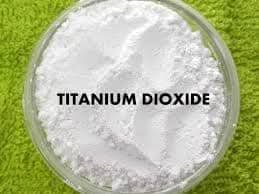
Its main functions include providing whiteness, brightness and coverage. Opacity is the ability of paint to hide the surface underneath it.
Titanium Dioxide is available in different grades. These grades are developed for different coating applications and can vary in their performance characteristics.
Titanium Dioxide should not be regarded as a direct shine chemical. Its primary role is pigmentation and hiding power. The final gloss depends on how the pigment works with the binder and the rest of the formulation. See: What Is Titanium Used for in Paint Production?
3. Acrylic Gum
Acrylic Gum is an important use in paint formulation.
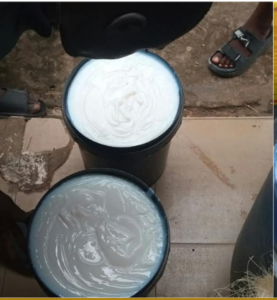
In water-based paints, the binder is responsible for holding the pigment particles together and helping the paint adhere to the surface. As the paint dries, the binder contributes to the formation of a continuous coating film.
The quality and quantity of your acrylic gum can have a direct influence on important paint properties, including adhesion, durability, washability and the final appearance.
Acrylic binders are available in different grades. Some are designed for flat paints, while others are developed for satin, semi-gloss and gloss coatings. See: What Is Acrylic Gum Used for in Paint Production?
4. Texanol
Texanol is a coalescing aid used in water-based latex paints.
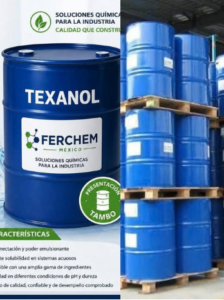
Its role is particularly important during film formation.
When water-based paint is applied to a surface, the water begins to evaporate. The polymer particles in the paint must come together and form a continuous film. This process is known as coalescence.
Texanol helps support this process by assisting the polymer particles in forming a more coherent film under suitable conditions.
A properly formed paint film contributes to important performance properties, including film integrity, washability, scrub resistance and touch-up performance. See: What Is Texanol Used for in Paint Production?
A satin finish requires a suitable, continuous film. If film formation is compromised, the finished paint may develop poor surface properties and fail to achieve its intended appearance.
However, Texanol is not a chemical that simply makes every paint shiny. Its effectiveness depends on the binder system, the formulation and the environmental conditions during drying.
Why Is Your Satin Paint Not Shining?
If your satin paint dries without the expected shine, the problem may not be caused by one chemical alone.
The following are important areas to investigate.
1. Unsuitable Acrylic Binder
The binder is one of the most important components in a water-based satin paint.
If the acrylic quality and quantity is not the recommended industry standard, it may not provide the film properties required for the intended finish.
2. Poor Film Formation
A water-based paint must form a continuous film as it dries.
If the polymer particles do not come together properly, the paint may develop a weak or uneven film.
This can affect the appearance and performance of the finished coating.
The coalescent, binder properties, temperature and humidity all influence this process.
3. Poor Pigment Dispersion
Titanium Dioxide must be properly dispersed during production.
Poor dispersion can cause an inconsistent paint appearance and affect the uniformity of the finished coating.
Producers should pay attention to the mixing process and ensure that the pigment is properly incorporated into the formulation. See our: Complete Paint Production Training
4. Incorrect Viscosity and Levelling
The paint must have suitable flow and levelling properties.
If it is too thick or does not level properly, brush marks, roller marks and uneven surface texture may remain after application.
These surface irregularities can affect how light reflects from the dried paint.
5. Incorrect Raw Material Selection
Not all chemicals with similar names or appearances have the same specifications.
Different grades of acrylic binder, titanium dioxide and additives can produce different results.
Always confirm that the materials selected are suitable for the intended satin paint system.
6. Poor Application Conditions
Even a properly formulated satin paint can produce a poor finish when applied under unsuitable conditions.
Applying paint to a dirty, rough or poorly prepared surface can affect the final appearance.
Excessive dilution, uneven application, unsuitable film thickness, high humidity or unfavourable drying conditions can also affect the result. See: How to Prepare Walls Before Painting: Tips for a Perfect Finishing
FAQs
1. Why is my satin paint drying like matt paint?
Satin paint may dry with a flat appearance when the formulation does not develop the intended surface sheen. Possible causes include unsuitable binder selection, poor film formation, poor levelling, pigment and unfavourable application conditions.
2. Does Titanium Dioxide make satin paint shine?
Titanium Dioxide mainly provides whiteness, brightness and opacity. Some grades are designed for coatings requiring good gloss, but TiO₂ is not a direct gloss additive. Its effect depends on the grade, dispersion and complete formulation.
3. Does Texanol make satin paint glossy?
Texanol is a coalescing aid. It supports the formation of a continuous film in water-based latex paints. This can help the coating develop its intended appearance and performance, but Texanol does not create gloss on its own.
4. What is the function of Acrylic Gum in satin paint?
Where Acrylic Gum is the acrylic binder or polymer component, it helps the paint adhere to the surface and form a continuous film after drying. The actual function and performance depend on the product grade.
Conclusion
Producing satin paint with a consistent shine requires more than adding chemicals to a production drum. The binder, pigment, additives and production process must work together to produce the intended coating.
Hydrosol, Titanium Dioxide, Acrylic Gum and Texanol each need to be understood according to their actual specifications and roles in the formulation.
When satin paint fails to shine, the best solution is to investigate the complete formulation, check the quality and compatibility of the raw materials, and carry out controlled tests.
A paint producer who understands the function of each material is better equipped to identify production problems, improve consistency and deliver a more reliable finished product. See more..

I am Godwin Zion With over 18 years of hands-on experience in construction finishing, I help organizations, entrepreneurs, vocational institutions, and development programs build practical skills that create jobs, improve quality, and support sustainable businesses.
My expertise combines technical knowledge with practical field experience in paint production, POP ceiling installation, wall preparation, decorative finishing, and construction finishing. I have trained aspiring entrepreneurs, skilled artisans, and business owners to produce high-quality paints, deliver professional finishing services, and build profitable businesses.
I believe practical skills create economic opportunities. My mission is to equip individuals and organizations with the knowledge, systems, and confidence to succeed in the construction finishing industry across Africa.