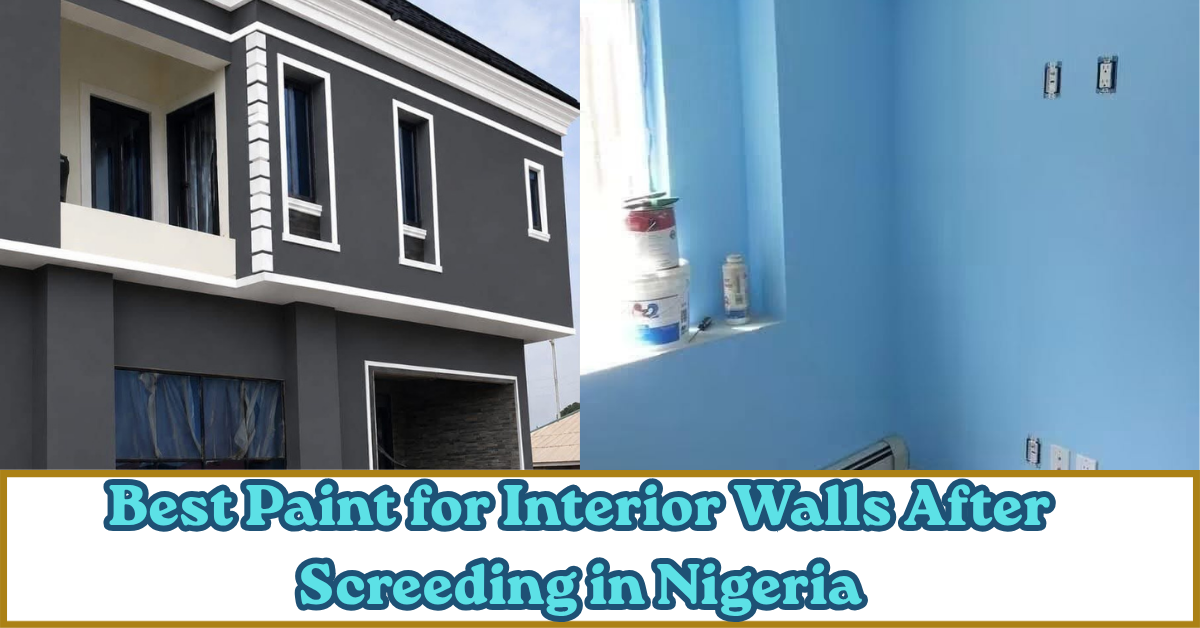
Having Completed wall screeding stage is an important milestone in every building project. If you are constructing a new home or renovating an existing one, the next decision you make after plastering can determine how beautiful and durable your walls will remain for many years. One of the most common questions homeowners, painters, and property developers ask is, “What is the best paint for interior walls after screeding in Nigeria?”
Many people rush into painting immediately after screeding without understanding that the wrong paint or poor surface preparation can lead to peeling, blistering, rough finishing, cracks, and poor adhesion. Even expensive paint cannot produce a smooth and long lasting finishing if it is applied on a wall that has not been properly prepared and treated. Also see: How to Repair Cracks in a POP Ceiling
The good news is that choosing the right paint after screeding is not difficult when you understand the painting process. when you also understand the type of screeding done, it drying period, and the paint you select all contribute to the final appearance of your walls.
In this article, you will learn the best paint to use after screeding in Nigeria, when to start painting, how to prepare newly screeded walls, and the mistakes to avoid if you want a professional finishing that lasts for years. See: How to Calculate Paint Quantity for House
What Is Wall Screeding?
Wall screeding is the process of applying a smooth finishing gash over a plastered surfaces before painting. The purpose of screeding is to cover rough surfaces, fill small holes, hide imperfections, and create a level wall that is ready for painting. See: How to Produce Screeding Paint 2026
In Nigeria, three major types of wall screeding are commonly used. Cement screeding is widely used because it is durable and suitable for both interior and exterior walls. Putty screeding has become increasingly popular for interior finishing because it creates a very smooth surface that requires minimal sanding before painting. POP screeding is often used on decorative walls and ceilings where a finer finishing is required.
A properly screeded wall give a beautiful appearance to the wall, reduces paint consumption, and creates a more attractive finishing. Also see: How Much Does Wall Screeding Cost in Nigeria?
Why Choosing the Right Paint After Screeding Matters
The quality of the paint you apply after screeding affects more than just the colour of your walls. It determines how well the paint adheres to the surface, how easy it is to clean, how resistant it is to stains, and how long it maintains its original appearance. See: Wall Screeding Materials in Nigeria: Complete List and Prices
Using poor quality paint or selecting the wrong type of paint can result in premature fading, peeling, chalking, and moisture damage. This often forces homeowners to repaint much sooner than expected, increasing maintenance costs.
Quality paint also provides better coverage. A premium product spreads more evenly and often requires fewer coats to achieve a rich, consistent finishing. Although the initial cost may be higher, it usually offers better long term value.
Choosing the right paint also give good appeal to the beauty of your interior spaces. Smooth walls finished with quality paint reflect light more evenly and create a cleaner, more elegant appearance throughout the home. See:Best Paint for Every Part of Your House in Nigeria
How Long Should Screeded Walls Dry Before Painting?
One of the biggest mistakes people make is painting too soon.
Freshly screeded walls contain moisture that must evaporate before paint is applied. If paint is applied while the wall is still damp, moisture becomes trapped beneath the coating. Over time this can lead to blistering, peeling, mould growth, and poor paint adhesion.
The recommended drying period depends on the type of screeding material, weather conditions, ventilation, and wall thickness.
Under normal Nigerian weather conditions, cement screeded walls should generally be allowed to dry for at least two to four weeks before painting. Putty screeding usually dries much faster, although manufacturers’ recommendations should always be followed. POP screeding also requires sufficient drying time before any primer or paint is applied.
A simple way to check whether a wall is ready is to ensure the surface feels completely dry and shows no signs of dark patches caused by trapped moisture.
Should You Apply Primer Before Painting?
Yes. Applying primer is one of the most important steps in the painting process.
Primer acts as a bonding layer between the screeded wall and the finish paint. It seals porous surfaces, improves paint adhesion, reduces paint absorption, and creates a more uniform finishing.
Without primer, newly screeded walls often absorb excessive amounts of paint. This increases paint consumption, raises project costs, and may still produce rough finishing after several coats.
Using a quality primer before applying emulsion, acrylic matte, or satin paint helps achieve better colour consistency while extending the lifespan of the paint system.
Although some people skip this step to save money, doing so often results in higher repainting costs in the future.
Best Paint for Interior Walls After Screeding in Nigeria
There is no single paint that is suitable for every room in a house. The best choice depends on how the room is used, the level of moisture, and the type of finishing you want.
Satin paint is ideal and recommended for homeowners who prefer a slightly glossy appearance. It offers better stain resistance and is easier to wipe stain out, making it suitable for sitting rooms, children’s rooms, corridors, and other high traffic areas.
Before reading further, Kindly answer 👇this question
Do you Want to Produce These Paints Yourself?

If you have ever wanted to manufacture quality emulsion, acrylic matte, and satin paints instead of buying them, this is exactly what we teach inside Paint Production Academy.
The training covers:
Professional paint formulas
Material selection
Mixing procedures
Quality control
Cost calculation
Production for small and commercial quantities
How to start a profitable paint business
Many of our students who are Homeowners and Property developers now produce paint for personal projects and commercial sales.
Learn more about the complete Paint Production Training here.
Now lets continue with our article,
For some interior walls, high quality acrylic matte paint is widely regarded as one of the best options. It provides excellent durability, resists fading, adheres well to properly primed screeded walls, it hides stain and is easier to clean than ordinary emulsion paint. It is an excellent choice for Ceilings, Kitchen, hallways, outside lobby, Varrander and other busy areas of the home.
Premium emulsion paint is another common option, but not recommended, especially if the walls are screeded. Also using emulsion on already screeded wall seems like a waste of resources and materials, because why would you spend that huge money to screed and than prefer to use Emulsion on your walls?. doesn’t make sense right?.
The best results are achieved when quality paint is combined with proper wall preparation, a suitable primer, and the recommended number of coats. Also see: Labour Cost for Painting Work in Nigeria
Acrylic Matte Paint vs Emulsion Paint vs Satin Paint After Screeding
Many homeowners find it difficult to decide which paint to use after screeding because each option offers different advantages.
Acrylic matte paint is generally regarded as the most durable of the three. It provides excellent adhesion, resists moisture better, and maintains its colour for many years. Although it costs more than standard emulsion paint, it usually delivers superior long term performance.
Emulsion paint remains one of the most widely used interior paints in Nigeria because it is affordable and easy to apply. but not recommended for screeded walls. Modern premium emulsion paints also provide good coverage and attractive finishing when applied correctly. They are suitable for most interior spaces that are not exposed to excessive moisture.
Satin paint offers a smooth finishing with a soft sheen that reflects light gently. It is highly resistant to stains and can be cleaned more easily than ordinary emulsion paint or Acrlic matte. This makes it particularly suitable for sitting rooms, bedrooms, dining areas, corridors, and children’s bedrooms where walls are cleaned more frequently.
Rather than asking which paint is universally the best, it is more accurate to ask which paint is most suitable for the specific room you are decorating. Selecting the right product for each area of the home will produce better results than using one type of paint throughout the entire building. see: How Much Paint Do I Need for a 3 Bedroom Flat in Nigeria
Best Paint for Different Rooms After Screeding
Different rooms in a house are exposed to different levels of moisture, traffic, and daily use. Choosing the right paint for each room will improve durability and reduce maintenance.
Living Room
The living room is often the largest and most frequently used area of a home. Since it creates the first impression for visitors, the paint should provide a beautiful finishing while resisting stains and fading.
Satin paint is an excellent choice for living rooms because it offers a smooth finishing, long lasting colour, and excellent durability.
Bedrooms
Bedrooms usually experience less traffic than other parts of the house. Satin paint is suitable for most bedrooms because it produces a clean, beautiful and elegant appearance.
Homeowners who want a more luxurious finishing can choose Satin paint.
Kitchen
Kitchens are exposed to cooking fumes, grease, and frequent cleaning. The paint should resist stains and be easy to wipe.
Acrylic matte paint performs very well in kitchens because of its resistance to stains.
Bathroom
Bathrooms experience constant humidity and moisture. Using ordinary emulsion paint in bathrooms often leads to peeling and mould growth over time.
Moisture resistant Matte paint is usually the better option for bathroom walls.
Corridors and Hallways
These areas receive heavy foot traffic and are more likely to become dirty.
Satin or acrylic matte paint is recommended because both are durable and easy to clean.
Ceilings
Most ceilings are painted with emulsion paint because it provides a uniform finish and reduces light reflection.
POP Ceilings
For POP ceilings, high quality acrylic matte paint is recommended because the smooth surface of POP ceilings allows these paints to deliver a beautiful and consistent finishing.
Common Mistakes People Make After Screeding
Many painting problems can be traced back to mistakes made immediately after screeding.
One common mistake is painting before the wall has dried completely. Moisture trapped beneath the paint often causes peeling, bubbling, and mould growth.
Another mistake is skipping primer. Some homeowners believe primer is unnecessary, but this usually results in poor paint adhesion and higher paint consumption.
Using low quality paint is another costly error. Cheap paint may appear attractive because of its lower price, but it often requires additional coats and fades much sooner.
Poor surface preparation also affects the final result. Dust, loose particles, and rough patches should always be removed before painting begins.
Some people also apply very thick coats of paint in an attempt to finish quickly. Thick coats usually dry unevenly and may crack over time.
Ignoring the manufacturer’s drying time between coats is another mistake that reduces the quality and durability of the finishing.
Steps and Process for Painting Newly Screeded Walls
Painting a newly screeded wall requires patience and proper surface preparation.
Begin by allowing the screeded wall to dry completely. The wall should feel dry and show no signs of trapped moisture.
Inspect the entire surface carefully for cracks, holes, or rough areas. Repair any defects before painting.
Sand the wall gently to remove rough spots and create a smooth surface.
Clean the wall thoroughly to remove dust and loose particles.
Apply a quality primer evenly across the entire wall and allow it to dry according to the manufacturer’s instructions.
Once the primer has dried, apply the first coat of paint using a quality roller.
Allow the first coat to dry completely before applying the second coat.
Inspect the finished surface under good lighting to ensure even coverage and colour consistency.
If necessary, apply a third coat only after the second coat has dried completely.
Following these steps will produce a professional finishing that remains attractive for many years.
FAQs
1. What is the best paint for interior walls after screeding in Nigeria?
Satin paint or acrylic matte paint is generally considered one of the best options because of its durability, excellent adhesion, and resistance to fading.
2. Can I paint immediately after screeding?
No. Newly screeded walls should be allowed to dry completely before primer or paint is applied. Painting too early can lead to peeling, blistering, and poor adhesion.
3. Should I apply primer after screeding?
Yes. Primer seals the surface, improves paint adhesion, reduces paint absorption, and creates a more uniform finish.
4. Is emulsion paint suitable for newly screeded walls?
No. Quality emulsion paint performs well for walls that are not screeded.
5. Which paint lasts longer on interior walls?
Satin and acrylic matte paint generally lasts longer than standard emulsion paint because it offers better durability, stronger adhesion, and improved resistance to stains and fading.
6. How many coats of paint should I apply after screeding?
Two coats are usually sufficient for most interior walls. Some projects may require a third coat depending on the paint colour and wall condition.
7. Can I use satin paint after screeding?
Yes. Satin paint is an excellent choice for sitting room, bedrooms, corridors, children’s rooms, and other areas where walls require regular cleaning.
Conclusion
Choosing the best paint for interior walls after screeding in Nigeria is about much more than selecting a colour. The quality of the screeding, the drying period, the primer, and the paint all work together to determine the final appearance and durability of your walls.
For most interior spaces, Satin and acrylic matte paint offers the best combination of durability, beauty, and long term value. Taking the time to prepare the wall properly, applying a suitable primer, and using high quality paint will produce a smooth, attractive finishing that enhances the beauty of your home and reduces future maintenance costs.

Godwin Zion is the founder of Paint Production Academy and a professional paint production trainer with over 18 years of practical experience in paint production, POP ceiling installation, construction finishing, and interior project execution. He teaches practical emulsion, acrylic Matte, and satin paint production using simplified step-by-step methods designed for homeowners, painters, engineers, property developers, artisans, and entrepreneurs. Through Paint Production Academy, he has helped students across Nigeria, Ghana, Cameroon and other part of the world learn valuable paint production skills that can reduce construction costs and create profitable opportunities.