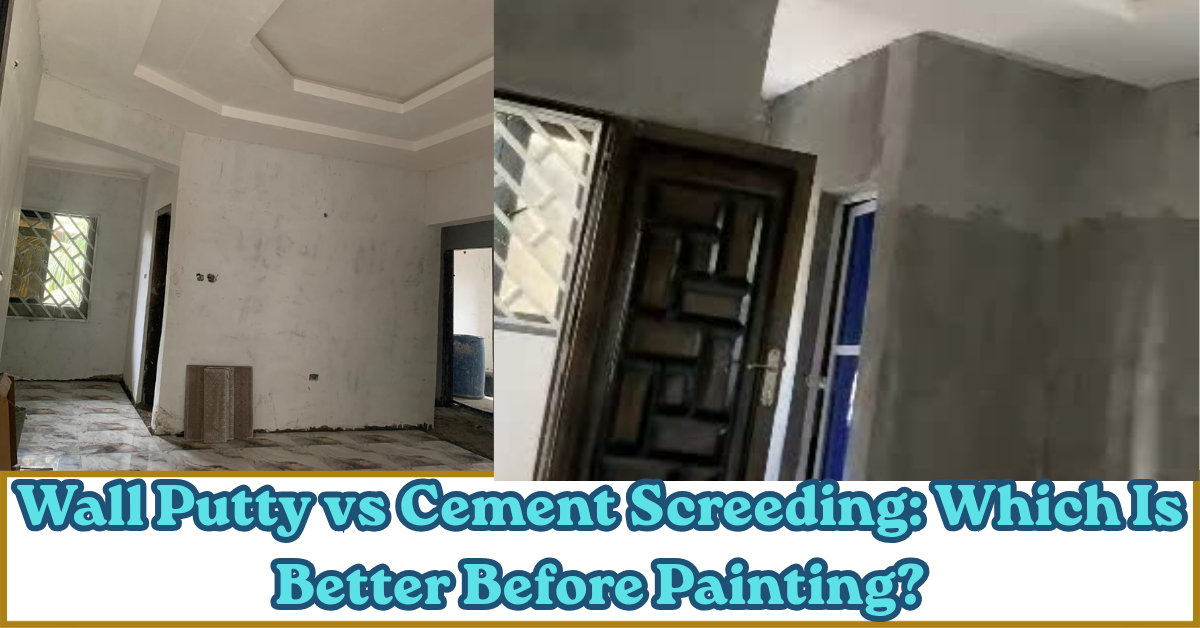
Wall Putty vs Cement Screeding
Choosing the right wall preparation method is one of the most important decisions you can make before painting your home or property. Many homeowners or property developers focus on buying quality paint but overlook the walls the paint is going to be applied on. The truth is that even the best paint cannot deliver a smooth surface, and give a durable finishing if it is applied to a poorly prepared wall. See: How to Prepare Walls Before Painting: Tips for a Perfect Finishing
Two of the most common wall preparation methods in Nigeria are wall putty and black cement screeding. Although both are used to prepare wall surfaces before painting, they serve different purposes and produce different results. Understanding their differences can help you save money, avoid costly mistakes, and achieve a professional-looking finishing. Also see: Is Screeding Necessary Before Painting Walls? Everything You Need to Know
So, which is better before painting: wall putty or black cement screeding? The answer depends on the condition of your walls, your budget, the type of building, and the finishing you want to achieve.
This article explains everything you need to know, including the key differences, advantages, disadvantages, costs, durability, and when to use each option.
What Is Wall Putty?
Wall putty is a fine powder made from white cement, polymers, minerals, and special additives. When mixed with water, it forms a smooth paste that is applied in a thin layer over walls before painting.
Some wall putty are manufactured into bucket were you just start using it wthout applying any other thing in it.
Its primary purpose is to create an ultra-smooth surface, fill tiny and rough imperfections like trowel marks, improve paint adhesion, and increase the lifespan of the paint.
Wall putty is mostly recommended for interior walls that want to undergo the following painting:
travatino decorative, stucco or any form of decorative paint. Unlike cement screeding, wall putty is not designed to level badly uneven walls. Instead, it serves as a finishing coat after the wall has already been properly plastered or screeded. Also see: How Long Should Screeded Walls Dry Before Painting?
Advantages of Wall Putty
Creates an exceptionally smooth finishing.
Improves paint adhesion.
Reduces paint absorption.
Produces brighter paint colours.
Minimizes hairline cracks.
Increases paint durability.
Requires less paint because the surface becomes more uniform.
What Is Black Cement Screeding?
Black Cement screeding is the process of applying a mixture of black (ordinary) cement, screeding paint, acrylic gum or P.V.A or Vinko bond or Top bond, and water seal to level rough plastered surfaces to cover some trowel marks and some imperfection on the wall. See: How to Do Black Cement Wall Screeding: Mix Ratio and Tips
It is much thicker than wall putty and is mainly used to correct rough walls, straighten poor surface plastering, and prepare them for final painting. see how cement screeding looks like here.
Advantages of Cement Screeding
Levels uneven and rough walls.
Strengthens wall surfaces.
Covers trowels marks and imperfections.
Provides a solid surface preparation for painting.
Suitable for both interior and exterior walls.
Long-lasting when properly installed. Also see:Wall Plastering vs Wall Screeding: Whats the Difference?
Wall Putty vs Black Cement Screeding: Key Differences
Although both is use for surface preparation before painting, they are not interchangeable.
| Feature | Wall Putty | Cement Screeding |
|---|---|---|
| Purpose | Finishing coat | Wall leveling |
| Thickness | Very thin | Thick layer |
| Main material | White cement and polymers | Cement, screeding paint, gum and water seal |
| Surface finishing | Very smooth | Moderately smooth |
| Paint adhesion | Excellent | Excellent |
| Suitable for rough walls | No | Yes |
| Best stage | Final preparation | Initial wall preparation |
| Paint consumption | Lower | Higher if left unsmoothed |
The biggest difference is that black cement screeding prepares the wall structure, while wall putty perfects the surface before painting.
Which Lasts Longer?
Both materials can last for decades when applied correctly.
However, they serve different purposes.
Black Cement screeding helps add strength to wall structure and generally lasts as long as the building itself unless affected by structural movement or moisture.
Wall putty is mostly use if you want to do decorative painting, like stucco, Travatino decorative, marble painting etc, but its lifespan depends heavily on the quality of the screeding beneath it.
For long-term performance, if you’re dong normal painting cement screeding is recommended. but it must fully dry and cured before painting is applied on it. See: How Long Should Screeded Walls Dry Before Painting?
Which Is More Affordable?
Black Cement screeding is generally less expensive in terms of material cost.
Wall putty costs more.
If your walls are already smooth, using wall putty alone may be more economical than carrying out extensive corrective screeding. See: Best Paint for Interior Walls After Screeding in Nigeria
Which Is Easier to Apply?
Wall putty is generally easier to apply on already smooth walls.
Black Cement screeding requires more skill because the application process must achieve level, straight surfaces while maintaining consistent layer.
Poor screeding can create rough walls that remain visible even after painting.
Experienced artisans are important for achieving professional results with black cement screeding. See: Why Is My Paint Peeling? 10 Causes, Fixes and Prevention
Which Is Better for Interior Walls?
For interior walls, the ideal approach is to use wall putty in place or areas you want to do decorative painting like stucco, travatino or marbel paint.
Use Black cement screeding in other areas or places. because black cement screeding creates a level surface.
If the walls are already properly screeded and in good condition, wall putty alone may be enough before painting.
Which Is Better for Exterior Walls?
Exterior walls face harsh weather conditions, including rain, sunlight, humidity, and temperature changes.
Black Cement screeding is generally the preferred option because it provides strength and durability.
Although some exterior-grade wall putties are available, not every product is suitable for outdoor use. Always choose a putty specifically designed for exterior applications if you plan to use it outside.
Can Wall Putty Replace Black Cement Screeding?
No.
Wall putty cannot replace black cement screeding on rough or uneven walls.
Because it is applied in very thin layers, it cannot level major surface defects, cover deep depressions, or straighten badly finished blockwork. See: Best Paint for Every Part of Your House in Nigeria
Can You Apply Wall Putty Over Black Cement Screeding?
Yes.
This is considered one of the best wall preparation methods before painting.
The recommended process is:
Allow the cement screeding to cure completely.
Ensure the surface is clean and dry.
Apply wall putty in thin, even coats.
Sand lightly after drying if necessary.
Apply primer and then your paint.
Which Option Is Best Before Painting?
The answer depends on the condition of your walls.
If the wall is rough or uneven, Black cement screeding should be done to create a level surface.
If the wall is already smooth and you choose to do stucco, or travatino decorative or marble etc, it is recommended to use wall putty. Also see: Labour Cost for Painting Work in Nigeria
Mistakes Homeowners Make
Many painting problems begin long before the first coat of paint is applied.
Applying wall putty directly to rough blockwork.
Painting before Black cement screeding has fully cured.
Skipping primer after wall putty application.
Using low-quality materials to reduce costs.
Hiring inexperienced artisans.
Applying wall putty too thickly.
Ignoring cracks and moisture problems before finishing. see: Why Is My Paint Peeling? 10 Causes, Fixes and Prevention
Choosing the wrong wall preparation method for the surface.
Avoiding these mistakes helps ensure a longer-lasting paint finishing.
FAQs
1. Is wall putty better than black cement screeding?
Neither is universally better. it depends on the type of painting you want to apply on your walls. Black Cement screeding is used to level walls and also recommended for normal painting, while wall putty is used for decorative painting to create a smoother surface before painting. They complement each other rather than compete.
2. Can I paint directly on Black cement screeding?
Yes, but you have to allow the screeding to properly dry and fully cured before applying paint, Primer should also be used before painting.
3. Do I need wall putty after Black cement screeding?
No. you don’t need wall putty after cement screeding except you want to apply stucco or travatino decorative or marble paint.
4. Which is cheaper, wall putty or cement screeding?
Black Cement screeding materials are generally less expensive, than wall putty.
5. Can wall putty be used on exterior walls?
Yes, but only if you choose a product specifically formulated for exterior use. Interior wall putty should not be used outdoors.
6. How long should cement screeding dry before applying paint?
The drying and curing period depends on the thickness of the screeding, weather conditions, and ventilation. it usually take three to 6 weeks to dry and properly cured.
7. Which is best before painting new walls?
For most newly constructed homes, the best approach is to apply black cement screeding, allow it to cure properly, before applying paint. only apply wall putty if you want to paint immediately and don’t want to wait, followed by primer and quality paint. This sequence produces the smoothest and most durable finishing.
Conclusion
When comparing wall putty vs cement screeding, it is important to understand that they are designed for different stages of wall preparation. black Cement screeding is used to level and strengthen rough walls before applying paint, while wall putty provides the smooth finishing layer that is mostly use before applying decorative paint.
By choosing quality materials, following the correct application process, and working with experienced professionals, you can enjoy smooth, durable, and attractive walls that remain in excellent condition for many years.

Godwin Zion is the founder of Paint Production Academy and a professional paint production trainer with over 18 years of practical experience in paint production, POP ceiling installation, construction finishing, and interior project execution. He teaches practical emulsion, acrylic Matte, and satin paint production using simplified step-by-step methods designed for homeowners, painters, engineers, property developers, artisans, and entrepreneurs. Through Paint Production Academy, he has helped students across Nigeria, Ghana, Cameroon and other part of the world learn valuable paint production skills that can reduce construction costs and create profitable opportunities.