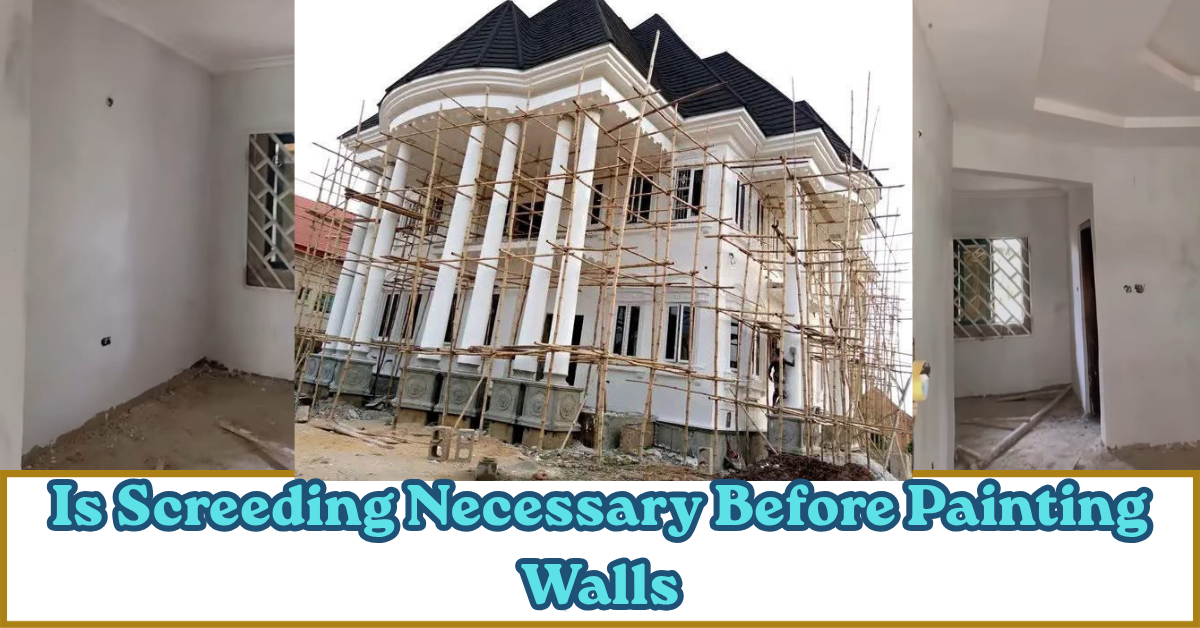
One of the most common questions homeowners ask before painting a new house is, “Is screeding necessary before painting walls?” The answer can make a significant difference in the appearance, durability, and overall quality of your paint finishing.
Many people are tempted to skip wall screeding to reduce construction costs. While this may save money initially, it can lead to rough walls, rough paint coverage, excessive paint consumption, and a finishing that does not meet modern construction standards.
Wall screeding is one of the most important stages of wall preparation. It creates a smoother surface, improves paint adhesion, and helps achieve the neat professional appearance seen in quality homes, hotels, offices, and commercial buildings across Nigeria. See: Best Paint for Interior Walls After Screeding in Nigeria
However, not every wall requires wall screeding. The need for screeding depends on the condition of the plastered wall, the type of finishing you want, and your budget.
In this article, i will explain whether screeding is necessary before painting, when it can be skipped, the benefits of screeding, common mistakes to avoid, and the proper process for preparing walls before applying paint.
What Is Wall Screeding?
Wall screeding is the process of applying a thin finishing layer over a plastered wall to cover rough and minor imperfections on the wall and create a smooth surface before painting.
The purpose of screeding is not to strengthen the wall but to give it a good surface preparation and make it ready for painting.
Depending on the desired result, screeding may be carried out using cement, wall putty, or plaster of Paris.(POP cement) See: How Much Does Wall Screeding Cost in Nigeria?
After the screeding material has dried, the wall is usually sanded to remove small irregularities the screeding pan didn’t pick befor paint is applied.
A properly screeded wall produces a cleaner, smoother, and make painting more attractive after finishing. See: Wall Plastering vs Wall Screeding: What’s the Difference?
Why Is Wall Screeding Done Before Painting?
Freshly plastered walls are rarely perfectly smooth. Even experienced artisans may leave minor ridges, trowel marks, pinholes, or rough surfaces after plastering.
If paint is applied directly to these imperfections, they become more noticeable, especially when light falls across the wall.
Wall screeding fills these rough imperfections and creates a more uniform surface making it ready for painting.
Screeding also reduces excessive paint absorption. Rough plastered walls often absorb more paint, increasing material costs and making it difficult to achieve quailty wall finishing. See: Wall Screeding Materials in Nigeria: Complete List and Prices
A smooth screeded wall allows paint to spread more evenly, resulting in better coverage and a more professional finishing.
Is Screeding Necessary Before Painting Walls?
In most cases, yes.
If you want smooth, attractive walls with a long lasting paint finishing, wall screeding is highly recommended before painting.
Screeding helps eliminate surface defects that ordinary plastering cannot completely remove. wall screeding is also use to fill some crooked and bend walls, It also helps the painting to appear beautifully and attractive on the wall and reduces the amount of paint consumption. see: How Much Paint Do I Need for a 3 Bedroom Flat in Nigeria
For homeowners building modern residential houses in Nigeria, screeding has become a standard practice because it produces walls that meet today’s finishing expectations.
However, the necessity of screeding depends on the intended quality of the project.
For luxury homes, offices, hotels, and premium residential buildings, screeding is almost always recommended.
For temporary structures, utility buildings, warehouses, or projects where appearance is less important, painting directly on plastered walls may sometimes be acceptable after proper preparation.
The decision should be based on the desired finishing rather than cost alone. See:Best Paint for Every Part of Your House in Nigeria
Can You Paint Directly on Plastered Walls?
Technically, yes.
It usually depend on the type of building or what you want to use the space for, it is usually not the best choice thou.
Painting directly on plastered walls often produces a rough appearance because plastering is primarily intended to level and strengthen the wall.
Plastered walls are generally more porous than screeded walls. As a result, they absorb more paint and may require additional coats before achieving your desired finishing.
Minor surface defects also become more visible after painting, reducing the overall beauty appearance of the room.
If you decide to paint directly on plastered walls, proper surface preparation becomes even more important. The wall should be completely dry, cleaned thoroughly, repaired where necessary, and coated with a suitable primer before the finishing paint is applied. See: How Much Is Interior Paint in Nigeria
Even with these steps, the final result may not match the smoothness of a properly screeded wall.
When Can You Skip Wall Screeding?
Although screeding is recommended for most residential buildings, there are situations where it may not be necessary.
Some industrial buildings, storage facilities, workshops, and utility structures are designed primarily for function rather than appearance. In these cases, a neatly plastered wall followed by primer and paint is okay.
You may also choose to skip screeding if decorative wall panels, tiles, stone cladding, wallpaper, or other wall coverings will completely hide the plastered surface.
Even in these situations, the plastering should still be properly finished to ensure the wall remains durable and suitable for painting.
For homes where appearance matters, especially living rooms, bedrooms, dining areas, and reception spaces, screeding remains one of the best investments you can make before painting. See: How To Produce Quality Acrylic Matt Paint Step By Step
Benefits of Screeding Before Painting
One of the biggest advantages of screeding is the smooth wall finishing it creates. Smooth walls reflect light more evenly and make paint colours appear richer and more attractive.
Screeding also improves paint adhesion by providing a cleaner and more uniform level surface for primer and paint finishing. See: How to Produce Screeding Paint 2026
Another benefit of wall screeding is it reduced paint consumption. Because screeded walls absorb less paint than rough plastered walls, fewer coats may be required to achieve complete coverage.
Wall screeding also helps conceal small rough imperfections that would otherwise remain visible after painting.
Perhaps most importantly, it increases the overall value and appearance of the property by producing professional finishing expected in modern homes.
Disadvantages of Skipping Wall Screeding
Although skipping wall screeding may reduce construction costs initially, it often leads to problems that become noticeable after painting.
One of the biggest disadvantages is an rough wall surface. Even if the plastering work appears neat, small ridges, trowel marks, pinholes, and rough areas usually remain. Once paint is applied, these imperfections become more visible, especially under natural light or bright interior lighting.
Another disadvantage is higher paint consumption. Rough plastered walls absorb more paint because of their porous texture. This often means buying more paint and spending more on labour to achieve good coverage and finishing. See: Labour Cost for Painting Work in Nigeria
Skipping screeding can also reduce the overall beauty of the finished building. Smooth walls give paint a richer appearance, while rough walls can make even expensive paint look less attractive.
In addition, future maintenance may become more difficult. Filling cracks or repairing damaged sections on rough walls usually requires more surface preparation before repainting.
How to Know If Your Walls Need Screeding
The easiest way to determine whether a wall needs screeding is to inspect its surface after plastering has dried.
If the wall has visible trowel marks, small holes, uneven patches, or rough textures, screeding is recommended before painting.
Running your hand gently across the wall can also help identify irregularities that may not be obvious at first glance.
Another method is to shine a bright light across the wall. Light falling from the side often reveals waves, bumps, and depressions that become even more noticeable after painting.
If your goal is to achieve a premium finishing similar to modern residential homes, hotels, or office buildings, screeding is usually the best option regardless of how smooth the plastering appears.
Process Before Painting Newly Screeded Walls
After screeding has been completed, the wall should be allowed to dry thoroughly. Drying time depends on the type of screeding material used, weather conditions, and ventilation.
Once the wall is completely dry, it should be sanded carefully to remove any remaining high spots and create an even smoother surface.
After sanding, all dust should be removed using a clean brush or broom. Dust left on the wall can reduce primer adhesion and affect the final paint finishing.
The next step is to apply a suitable primer. Primer helps seal the surface, improves paint adhesion, and reduces excessive paint absorption.
When the primer has dried according to the manufacturer’s instructions, paint can now be applied. Most quality interior paints require at least two coats to achieve a uniform colour and professional appearance. See: Best Paint for Interior Walls After Screeding in Nigeria
Allow each coat to dry properly before applying the next one. Rushing the process may affect the durability and appearance of the finished wall.
Common Mistakes Homeowners Make
One common mistake is painting before the screeded wall has dried completely. Moisture trapped beneath the paint can lead to peeling, blistering, mould growth, and poor adhesion.
Another mistake is skipping primer. Some homeowners believe primer is unnecessary, but applying paint directly to screeded walls often increases paint consumption and reduces the quality of the finishing.
Using low quality screeding materials is another problem. Inferior materials may crack, chalk, or fail to provide the smooth finishing required before painting.
Poor sanding is also a frequent issue. Failing to sand the wall properly leaves visible imperfections that become more noticeable after painting.
Some people also hire inexperienced artisans who may apply screeding roughly or use incorrect mixing ratios. This can result in cracks, weak bonding, and costly repairs later.
Finally, many homeowners choose paint based only on price instead of quality. Investing in good quality paint.
FAQs
1. Is screeding necessary before painting walls?
Yes. In most residential buildings, screeding is highly recommended because it creates a smoother surface, improves paint adhesion, and produces a more professional finishing.
2. Can I paint directly on plastered walls?
Yes, but it is generally not recommended for modern homes where appearance is important. Screeding usually produces a better result before painting.
3. How long should screeded walls dry before painting?
Drying time depends on the screeding material, wall thickness, weather conditions, and ventilation. The wall should be completely dry before primer and paint are applied.
4. Does screeding reduce paint consumption?
Yes. Smooth screeded walls absorb less paint than rough plastered walls, which often reduces the number of coats required.
5. Which comes first, plastering or screeding?
Plastering always comes first. Screeding is applied after the plaster has dried to create a smooth surface before painting.
6. What happens if you skip screeding?
Skipping screeding may result in rough walls, higher paint consumption, and a less attractive finishing.
7. Is wall putty better than cement screeding?
Both have their advantages. Cement screeding is durable and commonly used, while wall putty often provides an even smoother finishing for decorative painting. The best choice depends on the condition of the wall, your budget, and the finishing you want to achieve.
Conclusion
So, is screeding necessary before painting walls?
For most residential and commercial buildings, the answer is yes.
Wall screeding creates a smoother surface, improves paint adhesion, reduces paint consumption, and produces professional finishing expected in modern construction. Although it adds another step to the building process, the long term benefits usually outweigh the initial cost.
While it may be possible to paint directly on plastered walls in some situations, doing so often results in a rougher appearance and a less durable finishing.
If you want your investment in paint to deliver the best possible results, proper wall preparation should never be overlooked. A well plastered wall followed by quality screeding, primer, and paint will produce a finishing that remains attractive for many years while adding value to your property.

Godwin Zion is the founder of Paint Production Academy and a professional paint production trainer with over 18 years of practical experience in paint production, POP ceiling installation, construction finishing, and interior project execution. He teaches practical emulsion, acrylic Matte, and satin paint production using simplified step-by-step methods designed for homeowners, painters, engineers, property developers, artisans, and entrepreneurs. Through Paint Production Academy, he has helped students across Nigeria, Ghana, Cameroon and other part of the world learn valuable paint production skills that can reduce construction costs and create profitable opportunities.