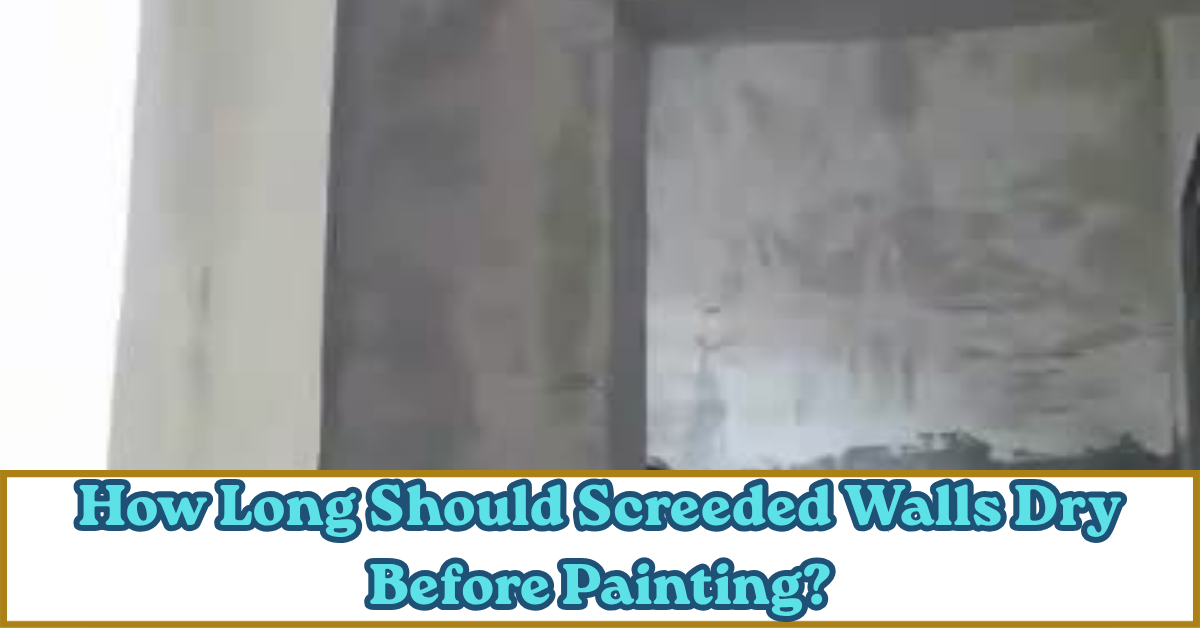
One of the biggest mistakes people make after building or renovating a house is painting screeded walls immediately. Although the walls may look dry on the surface, moisture can still be trapped inside. Applying paint before the wall has dried completely can lead to peeling, blistering, mould growth, discolouring, poor paint adhesion and making paint to fade faster.
Many homeowners ask, “How long should screeded walls dry before painting?” The answer depends on several factors, including the type of screeding material used, wall thickness, weather conditions, ventilation, and humidity. see: Is Screeding Necessary Before Painting Walls? Everything You Need to Know
Waiting for the right drying period is just as important as choosing quality paint. Even the best paint cannot perform well if it is applied to a screeded wall that is not dry. See: How to Prepare Walls Before Painting: Tips for a Perfect Finishing
In this article i will explain and share with you how long screeded walls should dry before painting, how to know when the wall is ready, the factors that affect drying time, common mistakes to avoid, and tips for achieving a smooth, durable, and professional paint finishing.
What Is Wall Screeding?
Wall screeding is the process of applying a thin finishing layer over a plastered wall to prepare it and create a smooth surface before painting.
Its purpose is to remove minor and rough imperfections, fill small holes, and give a good surface appearance to the wall. See: Wall Screeding Materials in Nigeria: Complete List and Prices
Depending on the project, screeding may be carried out using cement screeding, wall putty, or plaster of Paris (POP cement).
After screeding, the wall must be allowed to dry properly before sanding, priming, and painting.
Why Drying Time Is Important Before Painting
Fresh screeding contains moisture that must evaporate naturally before you paint.
If paint is applied before this moisture escapes, the paint film may trap water inside the wall and this will cause the paint to fade soon.
As the trapped moisture tries to escape later, it can cause paint failure.
Common problems include peeling paint, blistering, bubbling, chalking, mould growth, discolouration, reduced paint durability and fading. Also see: Best Paint for Interior Walls After Screeding in Nigeria
Proper drying allows the screeding material to cure fully, creating a solid surface that bonds well with paint.
Allowing enough drying time also reduces the risk of future repairs and helps your paint last much longer.
How Long Should Screeded Walls Dry Before Painting?
There is no single drying period that applies to every building because different materials and environmental conditions affect drying speed.
However, under normal weather conditions in Nigeria, cement wall screeding should generally be allowed to dry for about four weeks to seven weeks before paint are applied.
Wall putty usually dries much faster than cement screeding. Depending on the product used and the thickness of application, it may be ready for sanding and painting within one week after it has dried completely.
Plaster of Paris (POP cement) also dries quickly, but the manufacturer’s instructions should always be followed because different products have different curing requirements, some take one week others might take longer depending on weather, and ventilation of the place .
Rather than relying only on the calendar, it is better to confirm that the wall is completely dry before painting. See: Best Paint for Every Part of Your House in Nigeria
Patience at this stage produces a solid, stronger, smoother, and longer lasting finishing.
Factors That Affect How Long Screeded Walls Take to Dry
Several factors determine how quickly a screeded wall becomes ready for painting.
The type of screeding material plays a major role. Cement screeding generally requires a longer drying period than wall putty or POP cement.
The thickness of the screeding layer also matters. Thicker applications contain more moisture and therefore require additional drying time.
Weather conditions influence drying significantly. Warm temperatures with good airflow usually speed up drying, while rainy weather and high humidity slow the process.
Ventilation inside the building is equally important. Opening windows and allowing fresh air to circulate helps moisture escape more efficiently.
The condition of the underlying wall also affects drying. If the plaster beneath the screeding has not cured properly, the entire drying process will take longer. Also see: Wall Plastering vs Wall Screeding: What’s the Difference?
How to Know If Screeded Walls Are Ready for Painting
The safest approach is to inspect the wall carefully instead of relying only on a specific number of days.
A dry screeded wall usually has a consistent colour without dark or damp patches.
The surface should feel dry when touched and should not feel cold or damp.
There should be no visible moisture stains or water marks.
After sanding, the wall should produce a fine dry powder rather than a sticky powder.
A paint applied to a properly dried wall should spread evenly without unusual absorption or patchiness.
If there is any doubt, allowing a few additional days of drying is usually safer than painting too early. see: How Much Is Interior Paint in Nigeria
What Happens If You Paint Too Early?
Painting over damp screeded walls often leads to disappointing results.
One of the most common problems is peeling paint. Moisture trapped beneath the paint weakens adhesion and causes the paint film to separate from the wall.
Blistering and bubbling may also develop as trapped moisture pushes against the paint.
Another common issue is mould growth, particularly in poorly ventilated rooms such as bathrooms and kitchens.
Colour consistency may also be affected because damp areas absorb paint differently from dry areas.
In severe cases, homeowners may need to scrape off the paint, allow the wall to dry again, and repaint the entire surface, resulting in unnecessary labour and material costs. See: Labour Cost for Painting Work in Nigeria
Step and Process to take After Screeding
After completing the screeding work, allow the wall to dry naturally.
Once the wall has dried, sand the entire surface carefully to remove minor or rough areas.
Clean away all sanding dust using a soft brush or clean cloth or soft broom.
Inspect the wall under good lighting to identify any remaining defects that require repair.
Apply a quality primer or wall sealer suitable for the type of paint you intend to use.
Finally, apply your paint, allowing each coat to dry before applying the next one.
Following this sequence produces a smoother and solid finishing and improves the durability of the paint. See: How Much Paint Do I Need for a 3 Bedroom Flat in Nigeria
Mistakes to Avoid
One of the biggest mistakes is estimating drying time by appearance alone. A wall that looks dry may still contain moisture inside.
Another mistake is trying to speed up drying by applying paint before the wall has cured properly.
Poor ventilation also delays drying and increases the likelihood of moisture related problems.
Some homeowners skip primer, believing it is unnecessary. Primer helps seal the wall, improves adhesion, and creates a good finishing.
Using low quality screeding materials or poor workmanship can also affect drying and increase the risk of cracks.
Finally, many people ignore the weather. During the rainy season, drying usually takes longer because humidity slows moisture evaporation.
Tips for Better Results
Always use quality screeding materials and follow the manufacturer’s recommendations. See: Wall Screeding Materials in Nigeria: Complete List and Prices
Allow enough time for both the plaster and the screeding to cure before painting.
Maintain good ventilation throughout the drying period.
Inspect the wall carefully before applying primer.
Choose high quality primer and paint to maximise durability. See: How To Produce High Quality Satin Paint Complete Training
Avoid rushing the project simply to meet deadlines. Proper preparation almost always produces better long term results than fast completion.
FAQs
1. How long should screeded walls dry before painting?
Cement screeded walls generally require about four to seven weeks of drying under normal conditions. The exact period depends on the material, wall thickness, humidity, and ventilation. while wall putty and POP cement screeding take one or two weeks.
2. Can I paint screeded walls after one week?
In most cases, one week is too soon for cement screeding. while wall putty and POP cement screeding might be ready for painting, but it is still recommended to check and inspect that wall have completely dry before you apply paint.
3. How do I know when screeded walls are dry?
The wall should have a uniform appearance, feel dry to the touch, show no signs of dampness, and produce dry sanding dust instead of sticky powder.
4. Should I apply primer after screeding?
Yes. Primer seals the surface, improves paint adhesion, reduces paint absorption, and creates a better foundation for the paint.
5. Can damp walls damage paint?
Yes. Moisture trapped beneath paint is one of the leading causes of peeling, blistering, bubbling, mould growth, poor paint durability and paint fading.
6. Does weather affect screeding drying time?
Yes. Warm weather with good airflow generally speeds up drying, while rainy weather and high humidity increase drying time.
Before reading further, Kindly answer 👇this question
Do You Want to Produce These High Quality Paint Yourself
If you have ever wanted to manufacture high quality emulsion, acrylic matte, and satin paints instead of buying them, this is exactly what we teach inside Paint Production Academy.
The training covers:
Emulsion Paint Production
Acrylic Matte Production
Satin Paint Production
Mixing procedures, and systems
Cost calculation
Production for small and commercial quantities
How to start a profitable paint business
Many of our students now produce paint for personal projects and commercial sales.
Learn more about the complete Paint Production Training, start here.
Conclusion
Knowing how long screeded walls should dry before painting is Important for achieving a professional finishing that lasts.
Although waiting can be frustrating, allowing the wall to dry completely protects your investment by improving paint adhesion, reducing future maintenance, and preventing common problems such as peeling, blistering and paint fading.
The exact drying period depends on the screeding material, weather conditions, ventilation, and wall thickness. Instead of relying only on a fixed number of days, inspect the wall carefully and ensure it is completely dry before applying primer and paint.
Taking the time to prepare walls properly will always produce solid, smoother, stronger, and more attractive results. When combined with quality primer and high quality paint, properly dried screeded walls provide a finishing that remains beautiful for many years.

Godwin Zion is the founder of Paint Production Academy and a professional paint production trainer with over 18 years of practical experience in paint production, POP ceiling installation, construction finishing, and interior project execution. He teaches practical emulsion, acrylic Matte, and satin paint production using simplified step-by-step methods designed for homeowners, painters, engineers, property developers, artisans, and entrepreneurs. Through Paint Production Academy, he has helped students across Nigeria, Ghana, Cameroon and other part of the world learn valuable paint production skills that can reduce construction costs and create profitable opportunities.