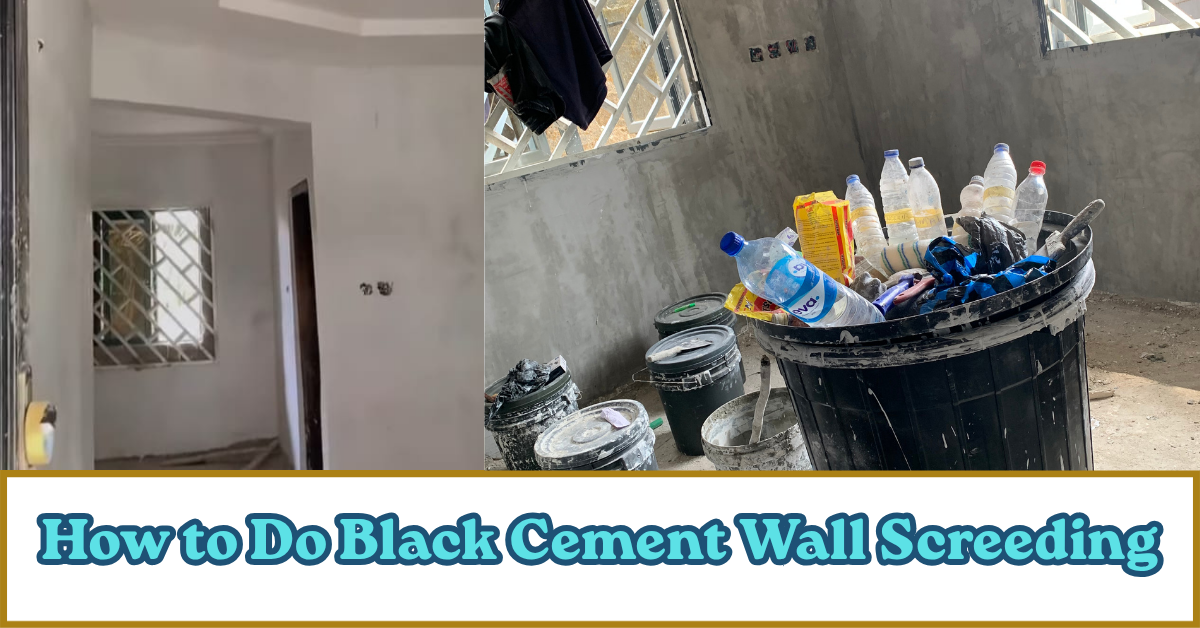
A smooth and attractive wall does not happen by chance. It is the result of proper surface preparation, quality materials, and the correct mixing techniques. One of the most important stages before painting is wall screeding.
If you are building a new house, renovating an old property, or preparing walls for painting, learning how to do black cement wall screeding correctly can save you money and improve the final appearance of your home.
Many homeowners in Nigeria spend thousands of naira on quality paint, only to discover that their walls still look rough after painting. In most cases, the problem is not the paint. The real issue is poor wall preparation or poor screeding.
Black Cement wall screeding creates a smooth and level surface that allows paint to adhere properly while giving walls a clean and professional finishing. When done correctly, it reduces paint consumption, gives durability, and solid appearance or beauty for every room or areas. See:How Long Should Screeded Walls Dry Before Painting?
In this article, you will learn what black cement wall screeding is, why it is important, the materials and tools required, how to carry out the work step by step, mistakes to avoid, and tips for achieving excellent results.
What Is Black Cement Wall Screeding?
Black Cement wall screeding is the process of applying a thin layer of mixture that comprise of black cement, screeding paint, water seal and acrylic gum over a plastered wall to create a smooth surface preparation before painting. Also see:Is Screeding Necessary Before Painting Walls? Everything You Need to Know
The main purpose of screeding is to remove imperfections and rough spot left after plastering. It fills small holes, covers bad areas, and creates a flat surface that improves the appearance and finishing of paint. See: Best Paint for Interior Walls After Screeding in Nigeria
Unlike plastering, which forms the main body of the wall finishing after block work, screeding is a finishing process carried out after the plastering have dry and cured properly. Also see: Wall Plastering vs Wall Screeding: Whats the Difference?
In Nigeria, black cement wall screeding remains one of the most common methods used in residential and commercial buildings because it is durable, solid, add more strength to your wall and produces excellent results when applied correctly. Also se:How Much Does Wall Screeding Cost in Nigeria?
Why Black Cement Wall Screeding Is Important
A properly screeded wall provides several important benefits.
First, it creates a smooth wall surface that adds and give beautiful appearance and finishing to painted walls. Even premium quality paint cannot completely hide rough plastering or rough surfaces. Also see: How To Produce High Quality Satin Paint Complete Training
Second, black cement wall screeding improves paint adhesion. Paint bonds more effectively to a properly surface prepared wall, reducing the chances of peeling and blistering. See: How Much Paint Do I Need for a 3 Bedroom Flat in Nigeria
Third, it helps reduce paint consumption. Rough walls absorb more paint, while smooth screeded walls require fewer coats to achieve uniform and good coverage.
Another important benefit is durability. A properly cement screeded wall is less likely to develop visible imperfections after painting, making maintenance easier over time.
Black Cement Wall Screeding vs Wall Plastering
Many people confuse wall plastering with wall screeding, but they are different construction processes.
Wall plastering is carried out immediately after block work is completed. It involves covering the wall with mortar to provide strength, protect the blocks, and create a basic surface.
Black Cement wall screeding comes after plastering has dried. Its purpose is also to increase wall strength and to also improve wall surface smoothness before painting.
A plastered wall may still contain trowel marks, shallow depressions, and rough textures. Screeding corrects these imperfections and prepares the wall for primer and paint. See more: Wall Plastering vs Wall Screeding: Whats the Difference?
Understanding this difference helps homeowners appreciate why screeding is often recommended before painting.
Materials Needed for Black Cement Wall Screeding
The quality of the finishing wall depends largely on the materials used.
Ordinary Black cement is used because it provides good bonding strength and durability.
Ordinary cement, mix with screeding paint, water seal, and acrylic gum to give it a solid bonding. See: How to Produce Screeding Paint 2026
Clean water is important for using it to mix with screeding paint (like 4 litres). Dirty water containing oil, chemicals, or excessive salts may reduce the quality of the screeding work.
Depending on the project, bonding agents like acrylic gum or P.V.A is required, it is also be used to improve adhesion, reduce cracking and to avoid chalking.
Steps to Apply Cement Wall Screeding:
Step 1: Prepare the Wall Surface
Before applying the screeding mixture, the wall must be prepared carefully.
Remove loose plaster, dust, dirt, grease, paint residues, and any other contaminants that may prevent proper bonding.
Inspect the wall for cracks, holes, or damaged sections. Carry out any necessary repairs before screeding begins.
Good preparation provides a strong foundation for the screeding material and improves long term performance.
Step 2: Mix the Cement Screeding Properly
After preparing the wall, the next step is to mix the screeding materials.
Start by dissolving your screeding paint with a little water (4 litres water).
Next is for you to apply your acrylic gum or P.V.A or vinko bond or Top bond (4 litres) into your screeding paint and steer thoroughly.
Next step is to portion your screeding paint to your mixing rubber and add some quantity of water seal.
Finally you add your Black cement and keep steering, and keep adding until it turns to a semi thick morta. See: Wall Screeding Materials in Nigeria: Complete List and Prices
Step 3: Apply the First Coat Evenly
Using a screeding pan or putty knief, scoop a small quantity of the screeding mixture and press it firmly against the wall.
Spread the material evenly while maintaining a consistent thickness across the surface.
Work in manageable sections instead of trying to cover the entire wall at once. This allows better control and produces a more uniform finishing.
please avoid making the screeding layer unnecessarily thick. Thick applications dry faster and are more likely to develop cracks later.
Continue applying the mixture until the entire wall is covered.
Step 4: Smooth the Wall
Once the screeding begins to firm up slightly, smooth the surface using a you screeding pan or putty knief.
Apply gentle pressure while making long, even strokes.
This removes minor imperfections and produces a cleaner finishing.
Depending on the desired appearance, if you want a white finishing when mixing your shinning gash add very litte Black cement.
Avoid excessive trowelling because it may weaken the surface or create some cracks after drying.
Step 5: Allow the Screeding to Cure Properly
Proper drying or curing is one of the most overlooked stages of Black cement wall screeding.
After application, the screeding should be allowed to dry and cure naturally.
Good curing improves and give strength, reduces cracking, and increases the durability of the finished wall.
Step 6: Sand the Surface
After the screeding has dried completely, inspect the wall carefully.
Use fine sandpaper to remove small ridges, rough patches, and trowel marks.
Sand gently to avoid damaging the screeded surface.
The objective is to produce a smooth finishing without creating scratches or rough areas.
After sanding, remove all dust using a soft brush or soft broom or clean cloth before applying primer. See: How to Prepare Walls Before Painting: Tips for a Perfect Finishing
Step 7: Apply Primer Before Painting
Primer is an important part of the painting process.
It seals the screeded surface, improves paint adhesion, and reduces excessive paint absorption.
Without primer, newly screeded walls may absorb paint unevenly, leading to inconsistent colour and higher paint consumption.
Choose a primer that is compatible with the type of finishing paint you intend to use. See: How Long Should Screeded Walls Dry Before Painting?
Allow the primer to dry completely before applying the finish coats.
Black Cement Wall Screeding Mistakes to avoid
Many screeding problems can be avoided by following proper construction practices.
One common mistake is adding excessive water to the mixture. Although a wetter mix may seem easier to spread, it increases shrinkage and reduces strength.
Applying screeding on dusty or dirty walls also causes poor bonding.
Some workers apply screeding that is too thick in a single coat. This often leads to cracking during drying.
Poor levelling is another frequent problem. you have to make your screeding to level on the wall
Rushing the drying process is equally damaging. Painting before the screeding has dried completely can result in peeling, blistering, fading paint colour and other paint defects. See: Best Paint for Every Part of Your House in Nigeria
Tips for Professional Results
Quality workmanship starts with proper planning.
Always use clean materials and accurate measurements.
Prepare the wall thoroughly before applying the screeding.
Mix only enough material that can be used before it begins to set.
Maintain consistent thickness across the entire wall.
Allow adequate drying and curing before sanding or painting.
Use quality primer and quality paint to maximise durability.
Inspect the finished wall under both daylight and artificial lighting before painting to identify any remaining imperfections.
FAQs
1. What is the purpose of black cement wall screeding?
Black Cement wall screeding creates a solid and smooth level wall surface that give and improves the appearance of painted walls.
2. Can I paint immediately after screeding?
No. The screeding should be allowed to dry completely before primer and paint are applied.
3. Does every wall require cement screeding?
Not always. Some walls finished with high quality plaster or specialised finishing compounds may require only minor preparation before painting.
4. Why do screeded walls crack?
Cracks may occur because of excessive water in the mix, poor curing, overly thick application, low quality materials, structural movement, or rapid drying.
5. Should primer be applied after black cement wall screeding?
Yes. Primer improves adhesion, reduces paint absorption, and creates a better foundation for the finish paint.
Conclusion
Learning how to do black cement wall screeding correctly is an important step toward achieving smooth, attractive, and long lasting painted walls.
Proper surface preparation, mixing ratio, careful application, adequate curing, and sufficient drying time all contribute to a professional finishing.
Although black cement wall screeding requires patience and attention to detail, the results are well worth the effort. A properly screeded wall not only improves the beauty of your home but also extends the lifespan of your paint and reduces future maintenance.

Godwin Zion is the founder of Paint Production Academy and a professional paint production trainer with over 18 years of practical experience in paint production, POP ceiling installation, construction finishing, and interior project execution. He teaches practical emulsion, acrylic Matte, and satin paint production using simplified step-by-step methods designed for homeowners, painters, engineers, property developers, artisans, and entrepreneurs. Through Paint Production Academy, he has helped students across Nigeria, Ghana, Cameroon and other part of the world learn valuable paint production skills that can reduce construction costs and create profitable opportunities.